
Prefer to Listen? Play this quick summary instead!
Workplace hazards can exist in any environment, from offices and warehouses to construction sites and outdoor worksites. Understanding these risks is the first step toward creating a safer and more productive workplace.
The importance of workplace safety goes beyond compliance. It helps protect employees, employers, and even clients from preventable harm. Safe workplaces support productivity, improve well-being, and reduce disruptions caused by injuries, lost time, and compensation claims.
While policies and procedures exist, effective safety often comes down to everyday actions. Small, consistent habits such as staying aware of hazards, using equipment properly, and following safety guidelines can significantly reduce risk.
Workplace safety is built through practical decisions made daily, not just during formal training or inspections.
Why Workplace Safety Is Important
Workplace safety directly impacts the health, income, and overall well-being of employees, while also influencing business operations and performance. When injuries occur, the effects can extend beyond the individual. They may lead to lost productivity, increased costs, and disruptions to daily operations.
Common workplace hazards such as slips, trips, and falls, manual handling injuries, and equipment-related incidents can occur in any industry. Without proper workplace injury prevention strategies, these risks can quickly result in avoidable harm.
Prioritising workplace safety helps reduce these risks and creates a more stable and efficient work environment. Proactive safety practices, including hazard identification, proper training, and safe work procedures, allow businesses to prevent incidents before they happen.
A strong focus on workplace safety not only protects people but also supports long-term performance and operational continuity.
💡 To understand how workplace injuries vary across industries and why prevention matters, read Most Common Injuries in 2025 and Which Industry is Most at Risk?
Who Is Responsible for Workplace Safety?
Workplace safety responsibilities are shared across all levels of an organisation. Creating a safe work environment requires consistent effort from employers, supervisors, and employees working together.
Employers are responsible for providing safe systems of work, maintaining a safe environment, and ensuring that employees have access to the appropriate training, tools, and equipment needed to perform their roles safely.
Supervisors should reinforce safety procedures and monitoring day-to-day practices. They help ensure that safety standards are followed and that any risks or unsafe behaviours are addressed promptly.
Employees are expected to follow workplace safety guidelines, report hazards or unsafe conditions, and take reasonable care of their own health and safety, as well as that of others around them.
💡 Workplace safety culture is built through shared responsibility and consistent behaviour. When everyone understands their role, risks can be managed more effectively and incidents can be reduced.
Top 10 Workplace Safety Tips
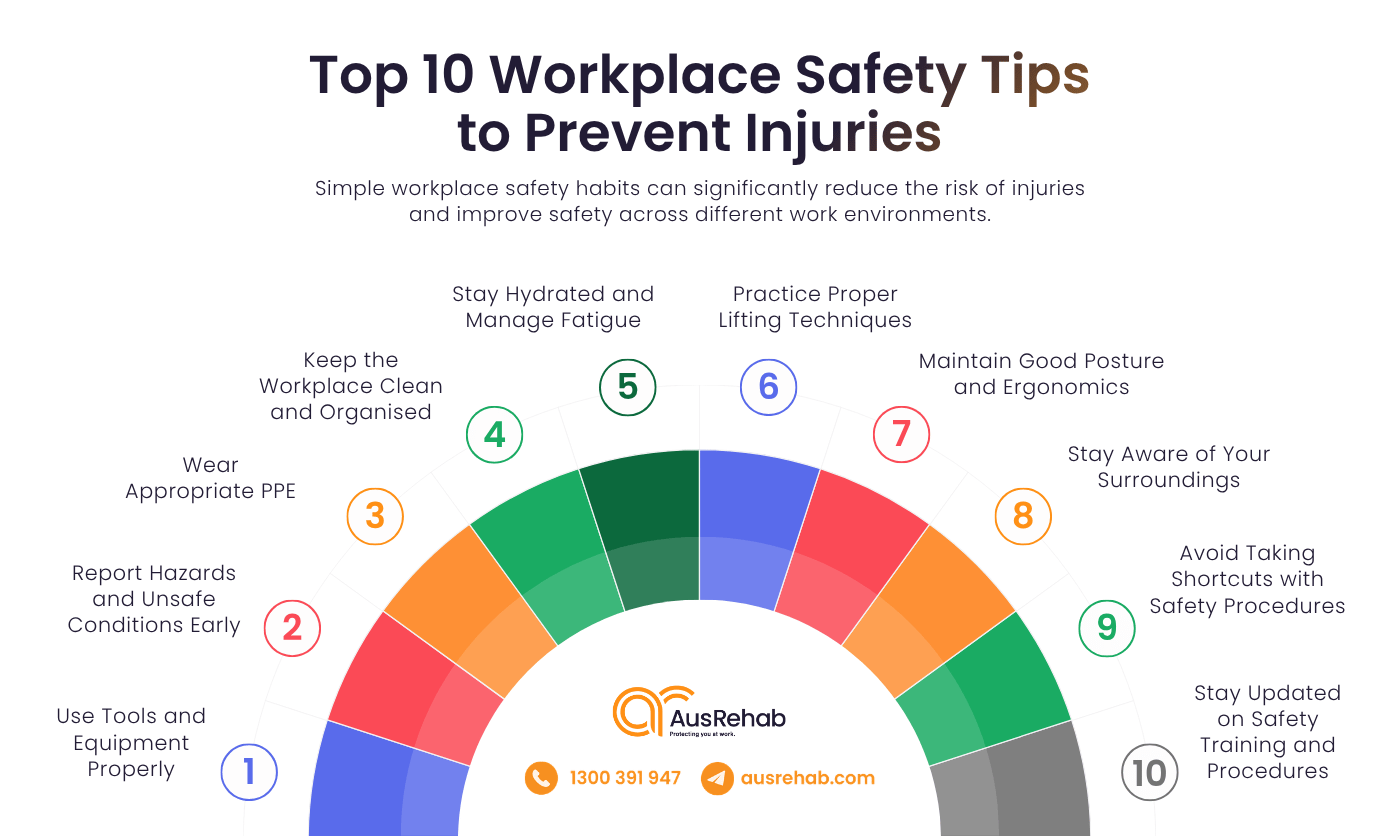
Implementing practical workplace safety tips can significantly reduce risk and support injury prevention in any work environment. These everyday actions help create safer, more efficient workplaces.
1. Use Tools and Equipment Properly
Only operate tools and equipment you are trained and authorised to use. Misuse can lead to serious injuries.
2. Report Hazards and Unsafe Conditions Early
Prompt reporting allows risks to be addressed before they result in incidents or injuries.
3. Wear Appropriate Personal Protective Equipment (PPE)
Use the required PPE for your role, such as gloves, safety glasses, high-visibility clothing, and steel-toe boots, to reduce exposure to hazards.
4. Keep the Workplace Clean and Organised
Maintaining a tidy workspace helps prevent slips, trips, and falls, which are among the most common workplace hazards.
5. Stay Hydrated and Manage Fatigue
Fatigue can reduce concentration and increase the risk of errors. Staying hydrated and taking appropriate breaks supports alertness.
6. Practice Proper Lifting Techniques
Use correct manual handling techniques to avoid strain and injury, particularly when lifting heavy or awkward objects.
7. Maintain Good Posture and Ergonomics
Proper posture and ergonomic setup are important for both physical and desk-based roles to reduce long-term strain.
8. Stay Aware of Your Surroundings
Situational awareness helps identify potential hazards and prevents accidents before they occur.
9. Avoid Taking Shortcuts with Safety Procedures
Safety protocols are in place to minimise risk. Skipping steps can lead to preventable incidents.
10. Stay Updated on Safety Training and Procedures
Ongoing training ensures that employees remain informed about best practices and evolving workplace risks.
Workplace Safety Tips Summary
Workplace Safety Tips and Why They Matter
| Safety Tip | Why It Matters |
|---|---|
| Use equipment properly | Reduces misuse injuries |
| Report hazards early | Prevents incidents |
| Wear PPE | Protects from hazards |
| Keep workspace clean | Reduces slips and falls |
| Manage fatigue | Improves alertness |
| Lift correctly | Prevents back injuries |
| Maintain ergonomics | Reduces strain |
| Stay aware | Prevents accidents |
| Follow procedures | Minimises risk |
| Ongoing training | Improves safety awareness |
💡 For a deeper understanding of high-risk areas like manual handling and fatigue, explore Categories of Manual Handling Hazards and How to Avoid Them and Top Strategies to Manage Fatigue and Stress in the Workplace.
Workplace Injury and Rehabilitation
Even with strong workplace safety practices in place, injuries can still occur. When they do, early support improves recovery outcomes and reduces the risk of long-term complications.
Workplace rehabilitation focuses on helping injured employees recover safely and return to work in a structured and sustainable way. This process often includes workplace assessments to identify risks, ergonomic assessments to improve work setups, and manual handling training to prevent further injury.
Support may also involve early intervention strategies and tailored return-to-work planning based on the worker’s capacity. Coordination between employers, treating doctors, and insurers helps ensure that recovery, treatment, and work duties are aligned.
With the right rehabilitation support, injured workers can regain function, rebuild confidence, and return to their roles safely while minimising the risk of re-injury.
💡 To better understand how suitable duties support recovery and return to work, read What is WorkCover Light Duties and Why It Matters
Creating Safer Workplaces
Workplace safety is built on everyday behaviours, awareness, and consistent practices. Small actions, when done consistently, can significantly reduce risks and prevent injuries across all types of work environments.
Encouraging proactive safety habits, early reporting of hazards, and ongoing training helps create a culture where safety becomes part of daily operations, not just a requirement. When everyone takes responsibility, workplaces become more resilient, productive, and supportive.
AusRehab supports workplaces through injury prevention strategies, rehabilitation services, and return-to-work programs designed to promote safe and sustainable outcomes.
Frequently Asked Questions (FAQs)
What are workplace safety tips?
Workplace safety tips are practical actions employees and employers can follow to reduce risks and prevent injuries. These include using equipment properly, reporting hazards early, wearing appropriate PPE, maintaining a clean workspace, and following safety procedures. Simple, consistent habits play a key role in maintaining a safe work environment.
Why is workplace safety important?
Workplace safety is important because it helps protect employees from injury, supports well-being, and reduces disruptions to business operations. Safe workplaces improve productivity, reduce compensation claims, and create a more stable and efficient work environment.
Who is responsible for workplace safety?
Workplace safety is a shared responsibility. Employers must provide safe systems of work and proper training. Supervisors must reinforce safety procedures and monitor practices. Employees must follow safety guidelines, report hazards, and take reasonable care of themselves and others.
What are common workplace hazards?
Common workplace hazards include slips, trips, and falls, manual handling risks, equipment-related injuries, poor ergonomics, and environmental factors such as inadequate lighting. These hazards can exist across various industries, from offices to construction sites.
How can workplace injuries be prevented?
Workplace injuries can be prevented through proactive safety practices such as hazard identification, proper training, the use of PPE, safe manual handling techniques, and maintaining clean and organised workspaces. Early reporting of risks and ongoing safety awareness are also critical.
What PPE should workers wear?
The type of personal protective equipment (PPE) depends on the work environment and associated risks. Common PPE includes gloves, safety glasses, high-visibility clothing, helmets, and steel-toe boots. PPE helps reduce exposure to hazards and minimise injury risk.
What are manual handling safety tips?
Manual handling safety tips include lifting with the legs instead of the back, keeping loads close to the body, avoiding twisting while lifting, and using mechanical aids where possible. Proper technique helps prevent strain and long-term musculoskeletal injuries.
How can employers improve workplace safety?
Employers can improve workplace safety by implementing clear safety procedures, providing regular training, conducting workplace assessments, and encouraging a culture of reporting hazards. Ongoing monitoring and early intervention also help reduce risks.
What is workplace safety culture?
Workplace safety culture refers to the shared attitudes, values, and behaviours that prioritise safety within an organisation. A strong safety culture encourages accountability, open communication, and consistent adherence to safety practices across all levels.
What support is available after a workplace injury?
After a workplace injury, support may include medical treatment, workplace rehabilitation, ergonomic assessments, and return-to-work planning. Early intervention and coordinated care between employers, doctors, and insurers can improve recovery outcomes.
Rehabilitation providers like AusRehab support injured workers through tailored programs that focus on safe recovery, restoring function, and returning to work in a sustainable way.