
Prefer to Listen? Play this quick summary instead!
A workplace health check is a structured, on-site assessment designed to identify potential health risks early, support employee wellbeing, and give employers practical insight into workforce health trends.
For Australian workplaces, this matters. Safe Work Australia reported 146,700 serious workers’ compensation claims involving at least one week of working time lost in 2023 to 2024. That equals more than 400 serious claims each day across Australia. The same report recorded 188 worker fatalities from traumatic injuries in 2024. These figures show why prevention, early support, and practical health insight remain central to safer work.
These workplace health screenings are becoming more common because they help organisations move from reactive health management to proactive prevention. They give employees useful information about their health. They also help employers support safer, healthier, and more productive workplaces.
Understanding Workplace Health Checks in Australia
A workplace health check is an on-site employee health check designed to identify potential health risks and support long-term well-being.
Unlike a standard GP appointment, it is tailored to the workplace. The focus is not only on individual health but also considers the health needs, role demands, and risks of a workforce.
A well-designed program offers value in two ways:
- Employees receive personalised insight into their health
- Employers gain a broader view of workforce health trends
This makes on-site workplace health checks useful for HR teams, WHS managers, insurers, case managers, and organisations building wellbeing initiatives.
What Is Included in a Workplace Health Check?
The inclusion of a workplace health check for employees depends on the workforce, industry, role demands, and health priorities of the organisation.
At AusRehab, workforce health checks can include a range of targeted screenings and assessments. These may be selected individually or combined into a tailored onsite package.
Workplace Health Checks and What They Help Identify
| Assessment | What It Helps Identify |
|---|---|
| Heart health checks | Early cardiovascular risk factors |
| Skin checks | Visible skin concerns that may need follow-up |
| Hearing testing, also called audiometry | Hearing issues in relevant work environments |
| Spirometry | Lung function concerns |
| Posture and movement screening | Physical risk factors and movement limitations |
| Strength and flexibility testing | Musculoskeletal risk and physical resilience |
| Vision testing | Basic vision-related concerns |
| Body composition analysis | General health and well-being indicators |
| Psychological screening or mental health screening | Psychosocial risks that may contribute to anxiety, depression, stress, or burnout |
💡 Safe Work Australia reported that 84% of serious workers’ compensation claims were linked to body stressing, falls, slips and trips, being hit by moving objects, or mental stress. This reinforces the need to consider both physical and psychological health risks in workplace wellbeing planning. (Source: Work Health and Safety Statistics Australia 2025)
How Do Workplace Health Checks Work?
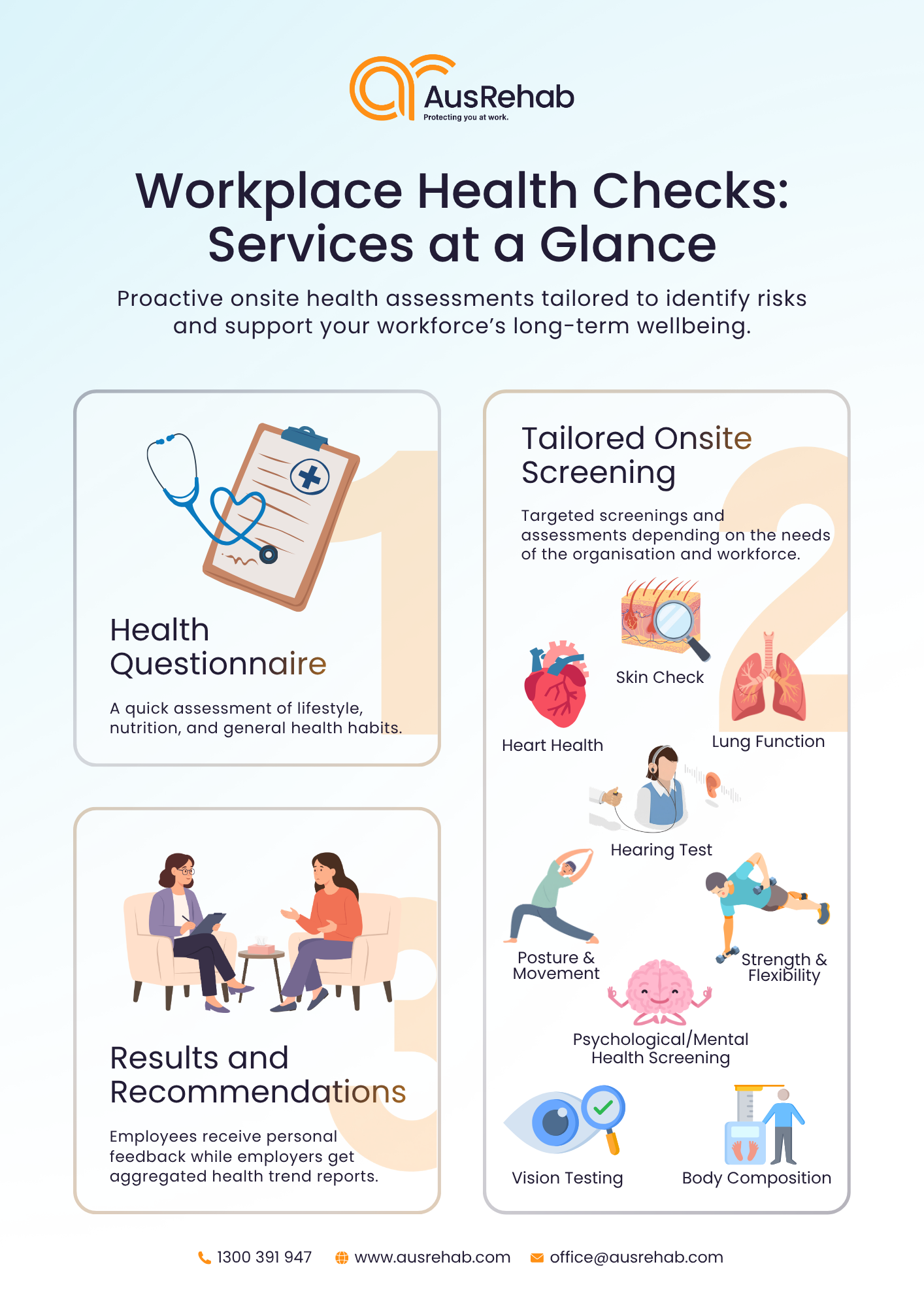
Occupational health screening in the workplace is usually delivered through a simple three-step process. The process is designed to be efficient, practical, and minimally disruptive to the workday.
1. Health and Lifestyle Questionnaire
Employees usually complete a short questionnaire before or during the screening.
This may cover:
- Exercise habits
- Nutrition
- Smoking
- Alcohol consumption
- Sleep
- General lifestyle risk factors
- Existing symptoms or concerns
- Work-related health concerns
This step helps the health professional understand the employee’s overall health picture and any relevant lifestyle factors.
2. Physical Health Screening
A qualified health professional then conducts the selected assessments. These may include cardiovascular checks, skin checks, hearing testing, spirometry, posture screening, strength and flexibility testing, vision testing, body composition analysis, or psychological screening.
The tests vary based on the workplace. For example, a noisy work environment may prioritise audiometry. A workforce with outdoor exposure may benefit from skin checks. A physically demanding workplace may focus on posture, strength, flexibility, and movement.
3. Results and Personalised Recommendations
After the screening, each employee receives their individual results and practical recommendations. These may include lifestyle guidance, movement advice, GP follow-up, or further assessment where needed.
Employers may receive an aggregated corporate report for groups of 10 or more employees, where applicable. This allows organisations to identify workforce trends without compromising individual confidentiality.
Are Workplace Health Checks Beneficial to Workers?
Absolutely. When delivered properly, workplace health checks can offer meaningful benefits to workers.
They Help Identify Health Risks Early
Some health concerns develop without obvious symptoms. Screening can help identify early risk factors linked with cardiovascular health, hearing, lung function, skin health, vision, movement, or mental well-being.
Early insight gives workers more time to act. It may also encourage them to speak with their GP before a concern becomes more serious.
They Support Injury Prevention
Posture, movement, strength, and flexibility screening can highlight physical risk factors that may contribute to discomfort, strain, or injury. This is valuable for manual workers, office-based employees, drivers, healthcare workers, warehouse teams, and anyone exposed to repetitive or physically demanding tasks.
Identifying these risks early helps workers make practical changes that support safer movement and physical resilience.
They Improve Awareness of Personal Health
Many workers do not arrange regular health checks. Time, cost, busy schedules, and uncertainty can all become barriers. On-site employee health checks reduce that barrier. They give workers a simple way to learn more about their health during the workday.
This can help them understand areas that may need attention. It can also encourage better habits around movement, nutrition, sleep, sun protection, hearing protection, stress management, or general well-being.
They Provide Convenient Access to Health Support
On-site workplace health checks reduce the need for employees to book separate appointments. This makes screening more convenient for busy teams, shift workers, field staff, and employees who may otherwise delay health checks.
They Support Physical and Mental Well-being
A good workplace health check does not view health too narrowly. Physical screening can identify body-related risks. Psychological or mental health screening can help identify stress, burnout risk, anxiety, low mood, or other well-being concerns. This gives workers a more complete view of their health and helps encourage earlier support.
Why Do Employers Use Workplace Health Checks?
Employers use workforce health checks because they support employee wellbeing and business performance.
For employers, the value is the ability to use early health insights to support a safer, healthier, and more productive workforce.
Identify Health Risks Across the Workforce
Aggregated reporting can help employers understand common health trends across teams. This may include cardiovascular risk, poor movement patterns, hearing concerns, lung function issues, stress indicators, or other workforce-level health themes. These insights can guide practical decisions around WHS, wellbeing, training, and risk management.
Reduce Absenteeism and Unplanned Leave
Early identification can help employees take action before health concerns affect attendance or capacity. While no program can remove absenteeism entirely, workforce health checks can support earlier intervention and more informed wellbeing planning.
Support WHS and Wellbeing Initiatives
Work health and safety is not limited to incident response. It also includes prevention, risk control, education, and ongoing improvement.
This may include:
- Manual handling education
- Ergonomic reviews
- Fatigue management
- Sun safety initiatives
- Hearing conservation strategies
- Respiratory health programs
- Mental wellbeing initiatives
- Movement and mobility sessions
- GP referral pathways
The strongest programs connect screening with action. A report should not sit unused. It should guide practical next steps.
Improve Engagement and Workplace Culture
Employees often value accessible health support. On-site employee health checks can show that an organisation is taking a practical interest in prevention and wellbeing. This can strengthen engagement, trust, and workplace culture when the process is clearly communicated and confidential.
Reduce Injury and Claim Risk
Early health insights can help employers identify physical and psychosocial risks before they contribute to injury, re-injury, or prolonged absence. This is especially valuable for organisations managing manual work, safety-critical tasks, ageing workforces, high-pressure roles, or complex return-to-work needs.
Why Regular Workplace Health Checks Matter
A single workplace health risk screening can provide a snapshot. Ongoing checks help organisations turn that snapshot into a more meaningful long-term wellbeing strategy. These annual workplace health checks provide greater value over time, such as:
- Tracking workforce health trends
- Measuring improvements over time
- Identifying new or emerging risks
- Supporting long-term wellbeing strategies
- Making better decisions about prevention and early intervention
Privacy, Confidentiality, and Employer Reporting
Privacy is one of the most important parts of any workplace health check program. Employees should receive their own individual results, and these should remain personal and confidential.
Clear communication is important before the program begins. Employees should understand:
- What the check includes
- Who will conduct it
- How results will be shared
- What information the employer will receive
- Whether GP referral may be recommended
Employer reporting should be aggregated where applicable. The purpose is to identify broad workforce trends, not to expose private medical information.
💡 Health information is sensitive information under Australian privacy guidance. The Office of the Australian Information Commissioner states that health service providers routinely handle sensitive health information and must understand their obligations under the Privacy Act 1988 and the Australian Privacy Principles.
How AusRehab Supports Workplace Health Checks
AusRehab delivers workplace health checks that are flexible, practical, and tailored to each organisation.
Our service includes:
- Onsite delivery
- Qualified health professionals
- Tailored screening packages
- Efficient assessments with minimal disruption
- Individual results and personalised feedback
- GP referral where required
- Aggregated reporting for employers, where applicable
We also provide broader workplace health and rehabilitation services. This means employers can connect screening insights with practical next steps, such as ergonomic assessments, manual handling support, functional assessments, or workplace rehabilitation services.
Support a Healthier Workforce with Workplace Health Checks
Workplace health checks give organisations a practical way to identify health risks early, support employee wellbeing, and strengthen workplace safety. They help workers understand their health. They also help employers identify broader trends that can guide better wellbeing and WHS decisions.
AusRehab delivers tailored onsite workplace health checks for organisations that want a clear, efficient, and practical approach to workforce health.
Speak with our team to explore tailored occupational health screening for your workplace, book an on-site employee health assessment, or discuss the right screening package for your workforce.
Frequently Asked Questions (FAQs)
Are workplace health checks mandatory in Australia?
Workplace health checks are not mandatory for every Australian workplace. They may be required in some roles or industries where workers face specific health and safety risks. Employers should consider their WHS duties, industry requirements, and the nature of each role.
How often should workplace health checks be done?
The right frequency depends on the workplace, workforce risks, and health goals. Many organisations choose annual or periodic checks to monitor trends over time. Higher-risk roles may need more regular screening.
Are workplace health checks confidential?
Yes, individual results should remain confidential. Employees receive their own personal results and recommendations. Employers may receive aggregated reporting where applicable, which shows broader workforce trends without identifying individuals.
What is the difference between a workplace health check and a pre-employment medical?
A workplace health check is usually offered to current employees to support wellbeing and identify health risks early. A pre-employment medical is completed before a person starts a role to assess their suitability for specific job demands. Both can support safer work, but they are used at different stages of employment.
Who performs workplace health checks?
Workplace health checks are performed by qualified health professionals. These may include occupational health providers, nurses, allied health professionals, or trained screening staff. The provider should have experience in workplace health and safety settings.
Can workplace health checks help reduce injury risk?
Yes, they can help identify physical and health-related risk factors before they contribute to injury. Checks such as posture, movement, strength, flexibility, hearing, and lung function screening can provide useful early insight. They work best when results lead to practical action, such as training, adjustments, treatment, or further assessment.