


Prefer to Listen? Play this quick summary instead!
A neck injury at work can significantly impact your daily life, but understanding your rights and finding the right support can get your recovery on track.
Suffering from neck injuries at work can happen suddenly in one incident or develop gradually. This often occurs through repetitive strain, poor posture, or ongoing physical demands. What begins as minor tightness, soreness, or stiffness can quickly progress. It can lead to severe headaches, restricted movement, sleep disruption, reduced concentration, and difficulty performing normal duties.
Many workers try to push through the pain and assume it will settle on its own. Others mistakenly believe they cannot make a claim unless there has been a serious accident. In reality, many workplace neck injuries are more complex than they first appear. Some of these injuries may qualify for workers compensation where work caused or materially contributed to the condition.
If you hurt your neck at work, the best first steps are usually to report the injury and seek a medical assessment. You should also begin treatment early and understand what support may be available.
Why You Must Take Neck Injuries at Work Seriously
The neck supports the head’s heavy weight, allows crucial movement, and protects important nerves passing through the cervical spine. Even relatively mild injuries in this area can create broader issues throughout the entire body.
A workplace neck injury may directly affect your ability to turn your head safely while driving or operating machinery. It can also impact lifting and carrying tasks, making everyday work duties painful or impossible. Desk work and concentration often suffer when constant neck pain is present.
Furthermore, a sore neck can drastically reduce your sleep quality. It often causes shoulder and upper back discomfort, which can negatively impact your overall mood and confidence. Without proper management, some injuries may become long-term problems that are much harder to resolve.
💡 Did you know that early intervention is one of the most effective ways to prevent a minor neck ache from becoming a chronic condition? If you are feeling ongoing discomfort, do not wait for it to worsen before seeking help.
What is a neck injury at work?
A workplace neck injury refers to pain, strain, whiplash, disc injury, or nerve-related conditions caused or aggravated by work duties, poor ergonomics, repetitive movement, or sudden workplace accidents.
What Causes Neck Injuries at Work?
Neck injuries occur across many different industries, including office environments, transport, healthcare, warehousing, retail, trades, and construction. They do not always happen from a single traumatic event. In fact, many develop over weeks or months from the day-to-day demands of a particular job.
Sudden Incidents and Accidents
Sudden incidents like slips, trips, falls, or collisions can cause immediate pain and structural damage to the neck. Workers who drive for a living may experience whiplash or related injuries after a vehicle accident during work hours. Additionally, sudden jerking movements when operating heavy machinery or attempting to catch a falling object can strain the neck muscles instantly.
Gradual Onset and Repetitive Strain
Poor workstation setup is a major culprit. Spending long periods at a desk with a poor monitor height, unsupported posture, or an awkward keyboard position may contribute to ongoing neck strain. This is why getting professional Ergonomic Assessments is incredibly beneficial for office workers.
Repetitive tasks such as reaching, scanning, twisting, looking downward, or overhead work can overload muscles and joints over time. Manual handling tasks involving lifting, pushing, pulling, carrying, or moving awkward loads may also strain the neck and upper body.
Participating in proper Manual Handling Training can significantly reduce these risks. Sustained static positions, like remaining in one posture for long periods during driving or computer work, also contribute heavily to chronic neck pain.
Without proper intervention, these small daily habits can result in severe musculoskeletal disorders. It is essential to proactively manage these risks by adjusting your environment and taking regular breaks. Many workers ignore minor aches, assuming it is just part of the job, which is a dangerous mindset.
Quick Video: How Poor Desk Setup Can Lead to Neck Pain
Many workplace neck injuries develop gradually from poor posture and incorrect workstation setup. This short video explains how ergonomics can impact neck pain, back strain, and overall workplace wellbeing.
Jobs With Higher Risk of Neck Injuries
While these injuries can happen in any industry, certain occupations face a much higher risk due to their specific daily duties.
Some professions naturally place more strain on the cervical spine than others. If you work in one of these fields, it is especially important to be proactive about your physical health and hazard reporting.
Office Workers: Spending hours in front of a computer often leads to poor posture, which slowly strains the upper back and neck muscles over time.
Truck Drivers: Long hours behind the wheel, continuous road vibration, and awkward sleeping positions can cause significant neck stiffness.
Nurses and Healthcare Workers: Repeatedly lifting, transferring, and assisting patients places immense physical demand on the neck and shoulders.
Warehouse and Retail Workers: Constantly reaching for high shelves, carrying heavy stock, and performing repetitive manual tasks increases the likelihood of muscle strains.
Tradies and Construction Workers: Working with heavy tools, spending long periods looking upward, and sudden physical impacts make this group highly vulnerable to joint and disc injuries.
Most Common Types of Workplace Neck Injuries
Not all neck injuries are the same. Some are minor soft tissue injuries, while others involve discs, nerves, or structural damage that requires extensive rehabilitation.
Common Neck Injuries and Their Symptoms
This table breaks down the most frequent neck injuries, their typical causes, and the symptoms you should watch out for.
Common Types of Neck Injuries and Their Symptoms
| Injury Type | Common Cause | Possible Symptoms |
|---|---|---|
| Whiplash | Sudden movement or impact | Pain, stiffness, headaches |
| Muscle strain | Overuse or poor posture | Tightness, dull soreness |
| Ligament sprain | Awkward twist or force | Sharp pain, reduced motion |
| Disc injury | Spinal compression | Arm pain, tingling sensation |
| Pinched nerve | Nerve pressure | Numbness, muscle weakness |
| Fracture | Major trauma or fall | Severe pain, immobility |
Common symptoms often include neck pain, stiffness, difficulty turning the head, headaches, and shoulder pain. You might also experience upper back tightness, tingling in the arms or hands, weakness, muscle spasms, and significant sleep disturbance
💡 If your symptoms are worsening or affecting your work capacity, a medical review is absolutely important. Do not push through the pain.
Immediate Steps: What to Do If You Hurt Your Neck at Work
Acting early can make a significant difference to both your physical recovery and your claims management process. If you are unsure of what to do, follow these crucial steps.
1. Report the Injury
Notify your employer, supervisor, or manager as soon as possible. Even if symptoms seem minor, early reporting creates a clear record of what happened. This step is vital if you later need to lodge a formal workers compensation claim.
2. See a General Practitioner
A doctor can properly assess your symptoms, recommend effective treatment, and provide referrals to specialists if needed. They will also document your injury and issue a Certificate of Capacity, which is required for compensation claims.
3. Start Treatment Early
Early treatment, such as physiotherapy, may help reduce pain, restore movement, and prevent symptoms from becoming persistent. Delaying treatment often leads to your body starting to move differently to protect the injury which can cause secondary injuries in your back or shoulders.
4. Keep Detailed Records
Retain copies of all incident reports, medical certificates, and appointment dates. You should also keep receipts for any out-of-pocket medical expenses, claim documents, and emails or communications with your employer. Having a paper trail is incredibly useful if there are any disputes about how or when the injury occurred.
5. Ask About Workers Compensation
If work contributed to the injury, ask your human resources department or your state’s workers compensation authority about the claim process. Understanding your entitlements early can relieve significant financial stress during your recovery.
6. Seek Professional Rehabilitation Support
If you are struggling to recover or return to your standard duties, structured rehabilitation may help. A dedicated Workplace Assessment can identify adjustments needed to keep you safe upon your return.
💡 Have you read our recent article on workplace safety? Checking out our Top 10 Essential Workplace Safety Tips can give you great insights into avoiding injuries like these in the first place.
Understanding Workers Compensation for Neck Injuries
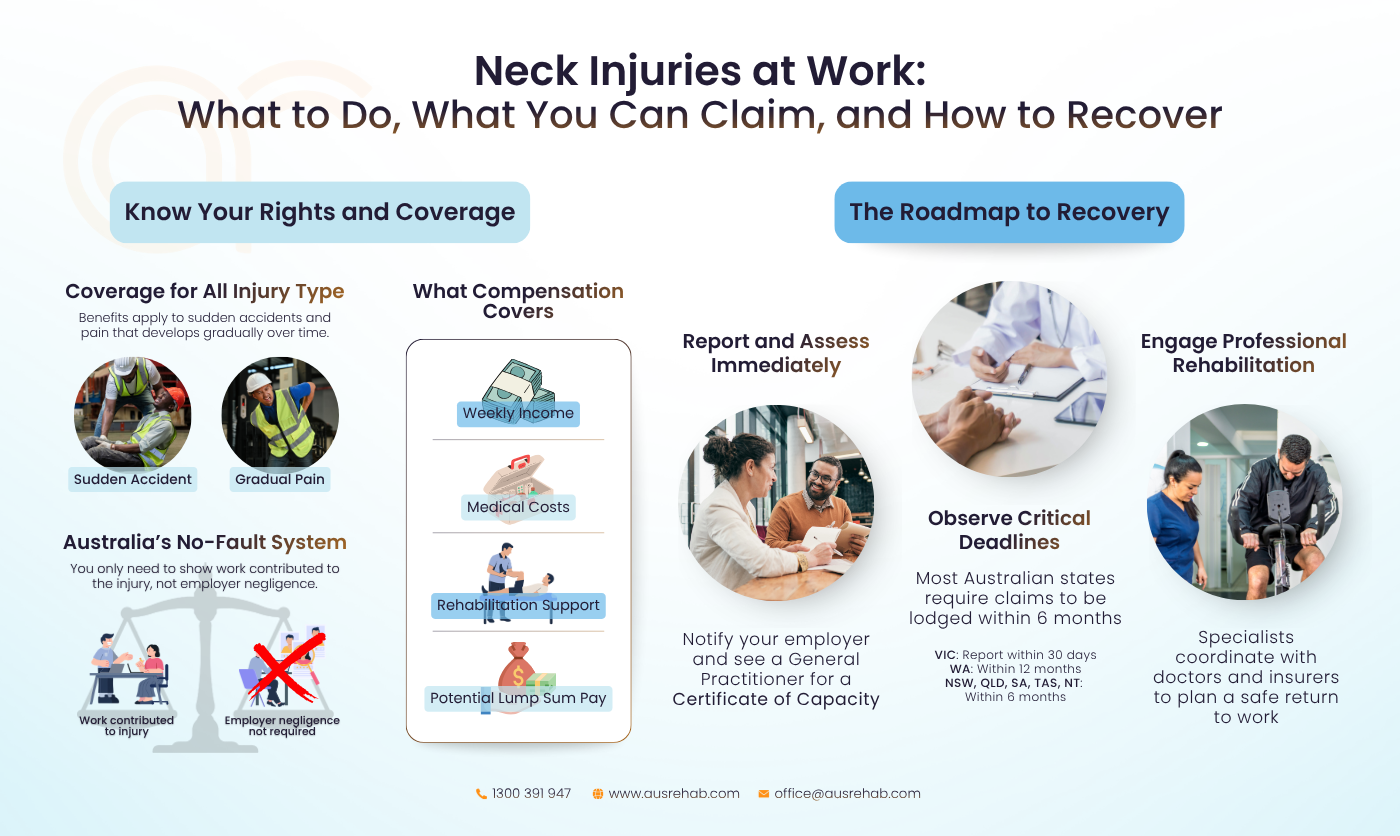
In many cases, yes, you can claim compensation.
If your neck injury happened at work or your duties materially contributed to the condition, you may be eligible for workers compensation. This depends heavily on your state or territory scheme.
According to guidelines from Safe Work Australia, employers have a duty of care to ensure a safe working environment. When this duty fails, compensation schemes are designed to protect the worker and facilitate their recovery.
Eligibility for Claims
You may have a claim if you hurt your neck lifting heavy objects at work, or if you suffered whiplash in a work vehicle accident. You might also be eligible if you slipped or fell during work duties, or if repetitive tasks caused neck pain over time. Furthermore, if a pre-existing condition worsened because of your work, you could still be covered.
Workers compensation for statutory benefits is generally a no-fault system. This means you do not usually need to prove negligence on the part of your employer, but you still need to satisfy strict eligibility requirements.
Can You Claim Gradual Neck Pain?
Yes, in many situations, gradual neck pain can be claimed. A common misconception is that only sudden accidents count. Many accepted claims involve conditions that developed progressively over weeks, months, or years.
Examples of gradual onset neck injuries include office workers with prolonged poor ergonomics and nurses repeatedly assisting patients. It also includes drivers sitting for extended hours, tradespeople performing overhead work, retail workers repeatedly lifting stock, and warehouse workers doing repetitive manual handling.
These claims often rely heavily on medical evidence connecting the condition directly to work duties, so early assessment matters immensely.
What Does Workers Compensation Actually Cover?
If a claim is accepted, the support provided can be extensive. Weekly payments offer crucial income support where eligible. GP treatment covers initial and ongoing medical care, while physiotherapy provides mobility and strengthening support.
Specialist care may be approved for further assessment or complex treatment. Imaging, such as X-rays or MRIs, will be covered where appropriate. Structured Workplace Rehabilitation programs offer essential return-to-work support. Subject to specific thresholds, permanent impairment benefits may be available.
The Workers Compensation Process in NSW
In NSW, the process is overseen by bodies like SIRA NSW, and common steps usually follow a specific order.
First, you must notify your employer immediately. Next, you need to see your GP to obtain a Certificate of Capacity if required for your time off. After that, you lodge your claim with the relevant insurer. The insurer will then assess liability and decide within a specific timeframe. During this period, you may be contacted by an injury management coordinator to discuss your situation. It is crucial to remain cooperative and communicate openly with all parties involved.
If accepted, treatment and support may commence right away. Where your physical capacity is reduced, suitable duties and return-to-work planning may also be considered to help you transition back safely. If you were involved in a motor vehicle accident while working, CTP Case Management services might also be relevant.
Time limits vary significantly depending on the state or territory, the type of claim, and the date of injury. The date symptoms became apparent or the date of diagnosis can also impact these limits. In NSW, SIRA outlines strict timeframes for reporting and claiming, so do not delay.
For more information, read our blog on the Workers Compensation Process in NSW.
💡 Important Rule: Report your injury as early as possible. Delays can make claims much harder to manage and may negatively affect the options available to you.
Why Early Rehabilitation Makes a Difference
Rehabilitation is often most effective when introduced early rather than as a last resort. Delaying this step can result in physical deconditioning and a loss of confidence. Getting an Initial Needs Assessment early on can set a clear path for recovery.
You should seek support if your pain is ongoing and symptoms are not resolving. Support is also vital if work duties like lifting, sitting, driving, or concentrating are becoming difficult. If you are entirely off work, early intervention may support a faster, safer return.
Additionally, if your recovery has plateaued and progress has slowed or stopped, expert help is necessary. When your confidence has dropped due to a fear of re-injury, rehabilitation professionals can help rebuild your trust in your body. Return to Work support programs are specifically designed to address these psychological barriers as well.
💡 Are you struggling to figure out your next career move after a severe injury? Our team also offers Vocational Counselling to help you transition into a new, safe role if you cannot return to your previous job.
How AusRehab Supports Your Recovery Journey
AusRehab supports injured workers across Australia through tailored workplace rehabilitation programs focused on safe, sustainable recovery. Our team understands the complexities of neck injuries and works closely with all stakeholders.
Support may include detailed return-to-work planning and a comprehensive Functional Assessment (FCE) to determine your physical capabilities. We also conduct a thorough ADL Assessment to see how the injury impacts your activities of daily living.
Furthermore, we handle the coordination with your GP, physiotherapist, employer, and insurer to ensure everyone is on the same page. We provide continuous progress monitoring, graduated duties planning, and ongoing recovery support. Our ultimate goal is to help workers rebuild function, confidence, and independence while reducing barriers to returning to work.
Take Control of Your Neck Injury Recovery
Recovering from a neck injury can be more complex than it first appears. Mild symptoms can quickly affect comfort, movement, productivity, and day-to-day life. Do not let pain dictate your future.
AusRehab supports injured workers through rehabilitation, workplace assessments, functional assessments, and return-to-work planning focused on practical, real-world results. Contact our expert team to learn more.
Explore our services or book a consultation today to start your recovery journey.
Frequently Asked Questions (FAQs)
What should I do if I hurt my neck at work?
You should immediately report it to your employer, seek a medical review, begin early treatment, and ask about the workers compensation process.
Can I claim workers comp for neck pain?
Possibly, yes. If your work caused or materially contributed to the condition, you might have a valid claim.
Does workers compensation cover whiplash?
Often, yes. Whiplash is covered where the injury occurred directly in the course of your employment duties.
Can desk work cause a neck injury?
Yes. Poor ergonomics, unsupported seating, and prolonged static posture may significantly contribute to gradual neck strain.
Can gradual neck pain be claimed?
Yes, many gradual onset injuries may qualify for compensation if medical evidence links them to work duties
How long does recovery take?
Recovery depends on the injury type, the promptness of treatment, and the overall severity of the condition.
What does AusRehab do?
AusRehab supports injured workers through tailored rehabilitation, functional assessments, and return-to-work services.