

Prefer to Listen? Play this quick summary instead!
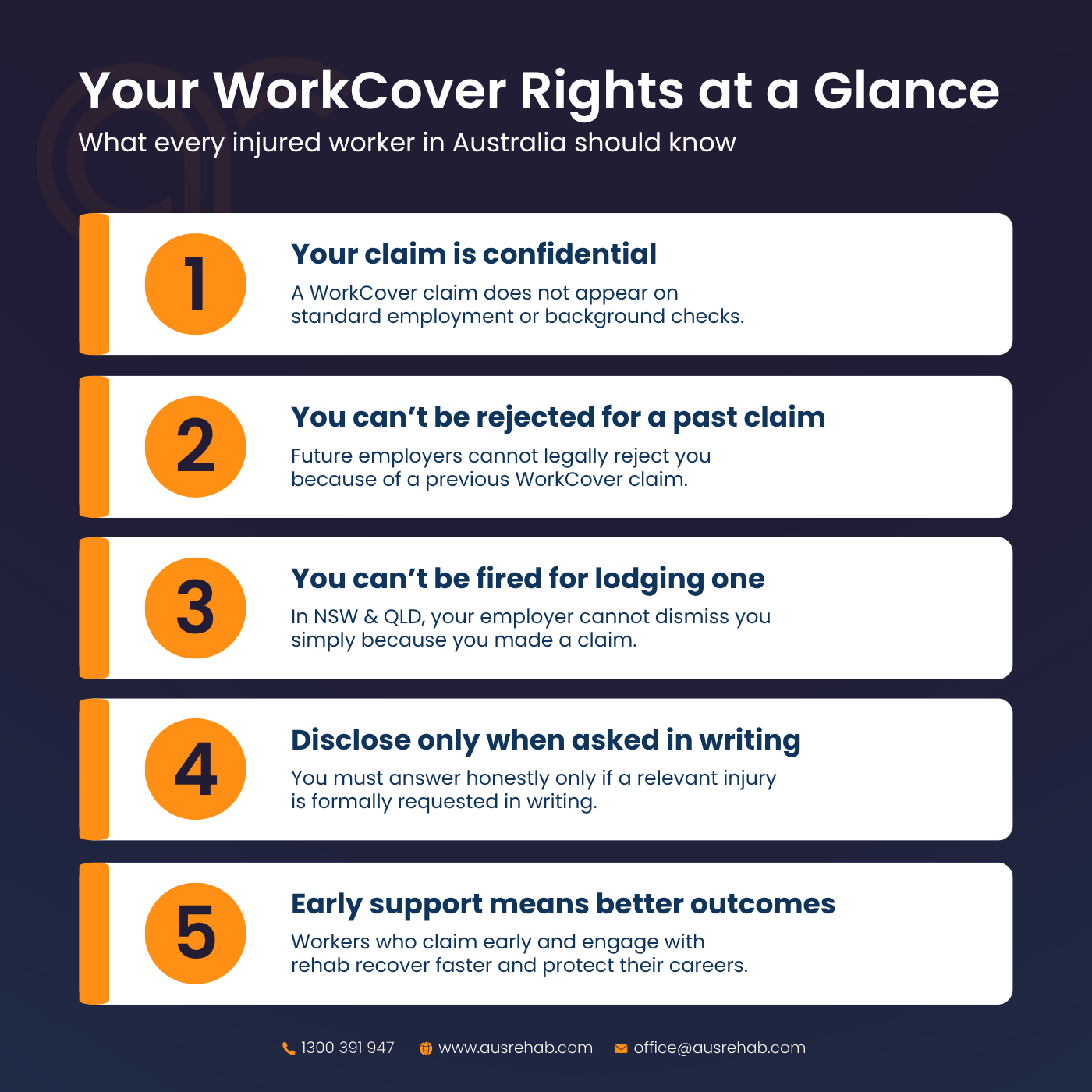
Many injured workers worry that making a WorkCover claim will affect their future employment. You may worry that your employer will treat you differently, that a future employer will find out, or that the claim will follow you like a bad reference.
In most cases, a WorkCover claim for future employment concerns is based on fear, not the full picture. A WorkCover claim is part of the workers’ compensation system, and it exists to support people who are injured or become unwell because of work.
Read how AusRehab explains whether a WorkCover claim affects future employment, what employers can and cannot see, when disclosure may apply, and how early rehabilitation support can help you return to work with more confidence.
The Fear That Stops People Getting Help
For injured workers, these worries are enough to make them hesitate before claiming at all, or avoid it entirely. The concern isn’t just about paperwork. It’s the sense that a claim might quietly work against them later, when they’re applying for a role, negotiating a promotion, or simply trying to be treated normally at work. That hesitation often means people delay getting support they’re entitled to, which can slow their recovery and their return to work.
That fear is understandable, but it is also often based on misconceptions.
A WorkCover claim is not a complaint against your employer. It is a claim through the workers’ compensation insurance system. Employers are required to hold this insurance because workplace injuries can happen.
The bigger risk is often not claiming at all. Delayed treatment can make recovery harder. It can also leave workers paying for medical care, lost income, and reduced capacity on their own.
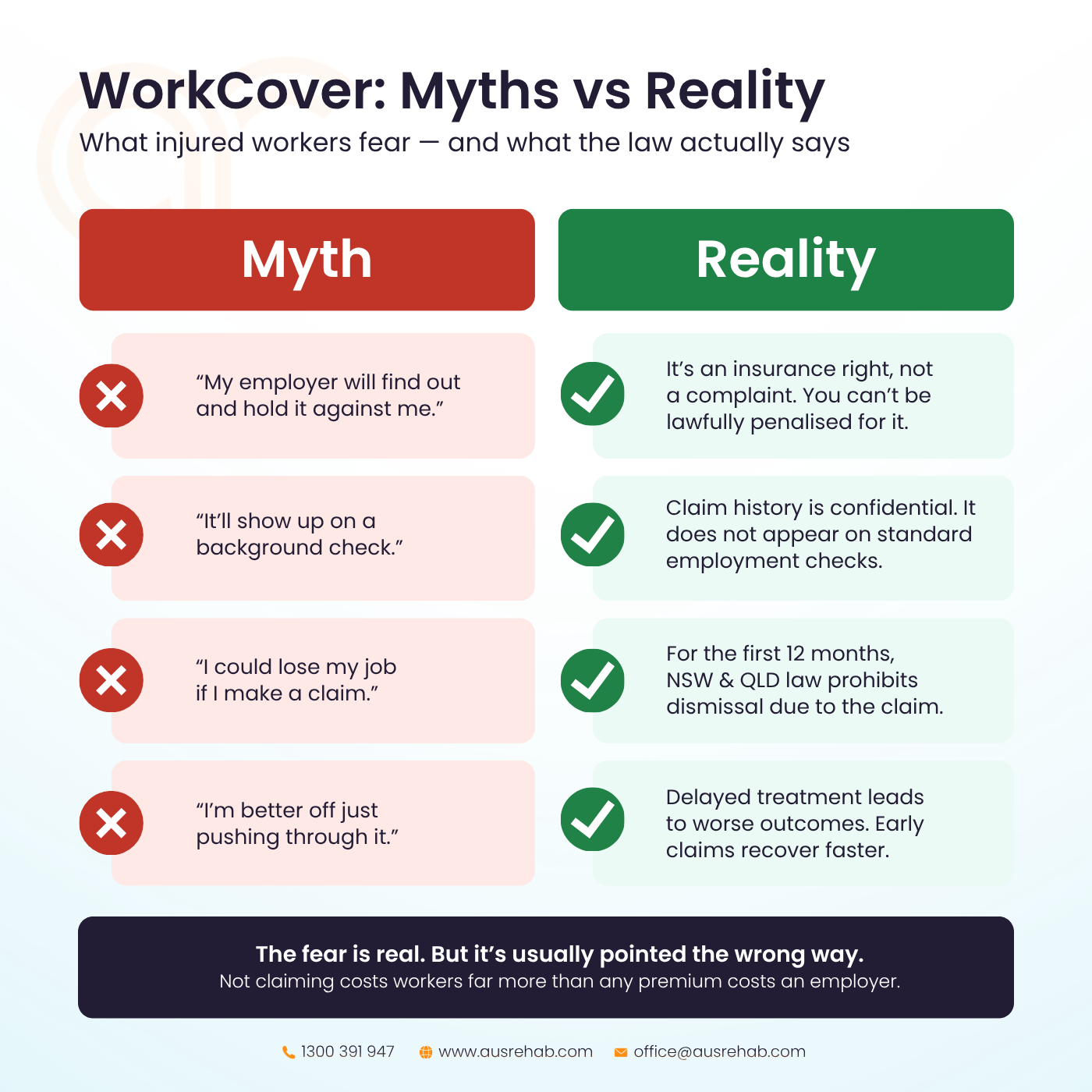
Here is what many workers believe and what Australian workers’ compensation protections actually say.
Common WorkCover Myths vs Reality
| Common Fear / Myth | What the Law Actually Says |
|---|---|
| My employer will find out and hold it against me. | Employers cannot lawfully penalise you for making a claim. It is an insurance right, not a complaint. |
| Future employers will see my claim on a background check. | WorkCover history is confidential. It does not appear on standard employment checks. |
| I could lose my job if I make a claim. | NSW and Queensland have legal protections against dismissal because of a work-related injury. The timeframe differs by state. |
| Making a claim is bad for my employer. | Employers pay workers’ compensation insurance premiums for this purpose. |
| I am better off just pushing through it. | Delayed reporting and treatment can make recovery harder and more expensive. |
Many workers delay or avoid lodging a WorkCover claim because of common misconceptions. The table above compares widespread beliefs with what Australian workers’ compensation laws and workplace protections actually say.
What Is a WorkCover Claim?
A WorkCover claim is a formal request for support after you are injured or become unwell because of your job. It is not a lawsuit against your employer. It is a claim through a workers’ compensation insurance system that employers are legally required to have.
Every state and territory in Australia has its own workers’ compensation scheme. The names and processes differ, but the purpose is similar. These schemes connect injured workers with support through an employer’s workers’ compensation insurer.
In NSW, workers’ compensation is commonly managed through iCare as the insurer and SIRA as the regulator. SIRA regulates workers’ compensation insurance in NSW.
Filing a claim is a legal right. A claim may support recovery through weekly payments, medical expenses, rehabilitation, permanent impairment compensation, and return-to-work support.
What Are Musculoskeletal Injuries?
| State / Territory | Managed By |
|---|---|
| NSW | iCare and SIRA |
| Queensland | WorkCover Queensland |
| Victoria | WorkSafe Victoria |
| Western Australia | WorkCover WA |
| South Australia | ReturnToWork SA |
| Tasmania | WorkSafe Tasmania |
| ACT | Private insurers approved by WorkSafe ACT |
| Northern Territory | NT WorkSafe |
Workers’ compensation is managed differently across Australia, but every worker has legal rights to claim support after a work-related injury or illness.
Benefits Available Through a WorkCover Claim
| Benefit | What It Actually Means for You |
|---|---|
| Weekly payments | Replaces part of your wages while you cannot work. |
| Medical expenses | Covers approved treatment, surgery, and rehabilitation costs. |
| Lump sum payment | Compensation if you have a permanent impairment. Current SIRA thresholds should be verified before publishing. |
| Return-to-work support | Support to help you recover, retrain, or transition into a different role if you cannot return to your previous duties. |
A workers’ compensation claim can provide much more than wage replacement. Depending on eligibility, support may include medical treatment, rehabilitation, vocational assistance, and compensation benefits.
Can a WorkCover Claim Affect Your Current Job?
A WorkCover claim should not be treated as a reason to push someone out of employment. Workers’ compensation exists to support recovery after a work-related injury or illness.
In NSW and Queensland, employers have specific restrictions around dismissing injured workers because they cannot perform their pre-injury role. Other states and territories also have protections, but the details differ.
After the protected period, termination may only be lawful in specific circumstances. This may include a genuine redundancy unrelated to the claim, a fixed-term or casual contract ending on its original terms, or medical incapacity where no suitable alternative role exists and due process has been followed.
If you believe you have been dismissed or treated unfairly because of your claim, it is important to seek advice quickly. Fair Work time limits can be short.
Can your employer fire you for making a WorkCover claim?
No. Your employer cannot lawfully dismiss you simply because you made a WorkCover claim. NSW and Queensland both have protections for injured workers, although the timeframes differ by state. If you believe you were dismissed because of your claim, you may be able to seek support through the Fair Work Commission.
What Are Your Employer’s Legal Obligations After a Workplace Injury?
Employers have clear responsibilities after a workplace injury. These obligations are part of broader WorkCover rights in NSW and return-to-work requirements.
Where reasonably practicable, employers should provide suitable duties that match your medical restrictions. This means work that fits your current capacity while you recover.
Employers must also participate in injury management and return-to-work planning. In NSW, return-to-work obligations are guided by SIRA requirements. Employers are expected to cooperate with the insurer, treating doctor, and any workplace rehabilitation provider involved in the claim.
Employer Responsibilities After a Workplace Injury
Employer Obligations During Injury Recovery
| Employer Obligation | What It Means |
|---|---|
| Suitable Duties | Provide work within medical restrictions |
| Injury Management | Participate in recovery planning |
| Return-to-Work Support | Assist with a safe return to employment |
| Consultation | Work with doctors, insurers, and rehabilitation providers |
| Workplace Safety | Reduce future injury risks |
🚨 Warning About Informal Deals
Some employers may tell injured workers not to bother with a claim and promise to “sort it out” privately. That promise is not the same as a formal workers’ compensation claim. It may not protect your access to medical support, income payments, or rehabilitation.
Timeframes can also apply. In Queensland, workers generally have 6 months from the injury date to lodge an application for compensation. NSW claims should also be reported and lodged as early as possible to avoid delays or entitlement issues.
Will a Future Employer Find Out About Your Claim?
Your claim history is confidential. A future employer cannot simply search for it or ask an insurer to hand it over.
However, there is one important distinction. Some roles may involve a pre-employment medical, especially in physically demanding industries such as construction, mining, healthcare, transport, and aged care. If a past injury still affects your ability to perform the role safely, it may be relevant to that assessment.
If you are fully recovered and fit for the role, a past claim should not be treated as a reason to reject you.
Can a future employer see my WorkCover history?
No. A future employer cannot access your WorkCover history without your consent. Health and injury information is treated as sensitive personal information under Australian privacy law. A past claim generally does not appear on standard employment checks, reference checks, or background screening.
What Can an Employer Actually Ask About Your Health?
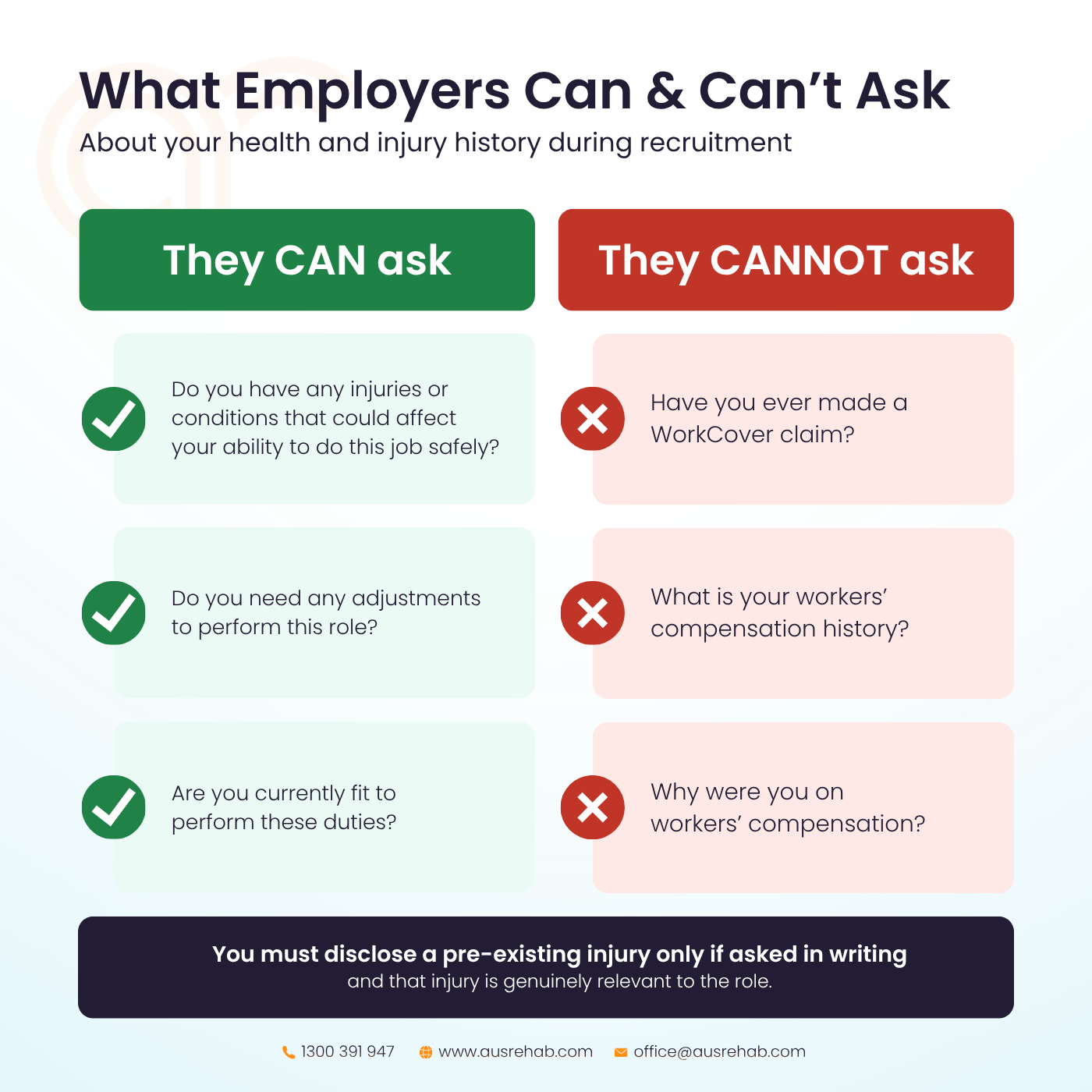
Employers can ask about your current ability to perform the role’s duties safely. They should not ask broad questions about your private claim history.
| Employers CAN Ask | Employers CANNOT Ask |
|---|---|
| Do you have any injuries or conditions that could affect your ability to do this job safely? | Have you ever made a WorkCover claim? |
| Do you need any adjustments to perform this role? | What is your workers’ compensation history? |
| Are you currently fit to perform these duties? | Why were you on workers’ compensation? |
What employers can and cannot legally ask about your health and injury history during recruitment.
If an employer makes a formal written request about pre-existing injuries that are relevant to the role, you should answer honestly. In some states, this may affect future claim rights if false or misleading information is given and the condition later recurs or worsens at work.
When responding, focus on your current capacity. Explain what you can safely do and whether any adjustments are needed. You do not need to give the full backstory of the claim unless it is relevant to the role.
⚠️ Disclosure Rule
You may need to disclose a pre-existing injury if an employer asks in writing and the injury is relevant to the role. If you are unsure what to disclose or how to answer, speak with a return-to-work coordinator or workplace rehabilitation provider before responding.
Does a WorkCover Claim Actually Hold Your Career Back?
The claim is not what limits careers; the injury sometimes does. That would still be true even if you never made a claim. This is where early support matters. Workers who engage with rehabilitation, treatment, retraining, or suitable work options are often better placed to keep moving forward.
Staying away from work for too long can make re-entry harder. SIRA notes that the longer a worker is away from work, the less likely they are to return. Structured return-to-work planning can help reduce that risk.
Employers may also need to consider reasonable adjustments for workers with disability. These adjustments may include changes to work processes, equipment, tools, or the work area.
Will a WorkCover claim hold back my career?
Not directly. A WorkCover claim itself should not hold your career back. Employers cannot lawfully treat workers or job applicants worse because of a physical or mental disability. What can affect career options is an ongoing injury that limits safe work capacity, not the fact that you made a claim.
An insurer case manager may arrange a referral to an occupational rehabilitation provider. These providers help injured workers identify suitable work options, prepare for employment, and access support where returning to the same employer is not possible.
This support may include resume and cover letter help, interview coaching, job-seeking support, work trials, and training options. In NSW, SIRA-funded programs may also support workers who need new skills, new qualifications, or employment with a new employer.
SIRA also has the JobCover Placement Program for eligible workers who cannot return to their pre-injury employer. It provides incentives for new employers to hire a worker with a work-related injury.
Can I Look for Work While My WorkCover Claim Is Still Active?
Yes. You can look for work while your WorkCover claim is active. If a new employer or a different type of work is the right recovery pathway, raise it early with your treating doctor, insurer, and rehabilitation provider. They can help plan a safe and realistic transition.
The Real Cost of Not Making a Claim
Many injured workers worry about what a claim will cost their employer. This is especially common in small businesses, where the worker may know the owner personally or feel guilty about adding pressure.
Staying quiet may feel like the generous option, but it can also lead to a costly decision. You manage the pain yourself, you pay for the appointments yourself, and you keep working until the injury becomes harder to ignore.
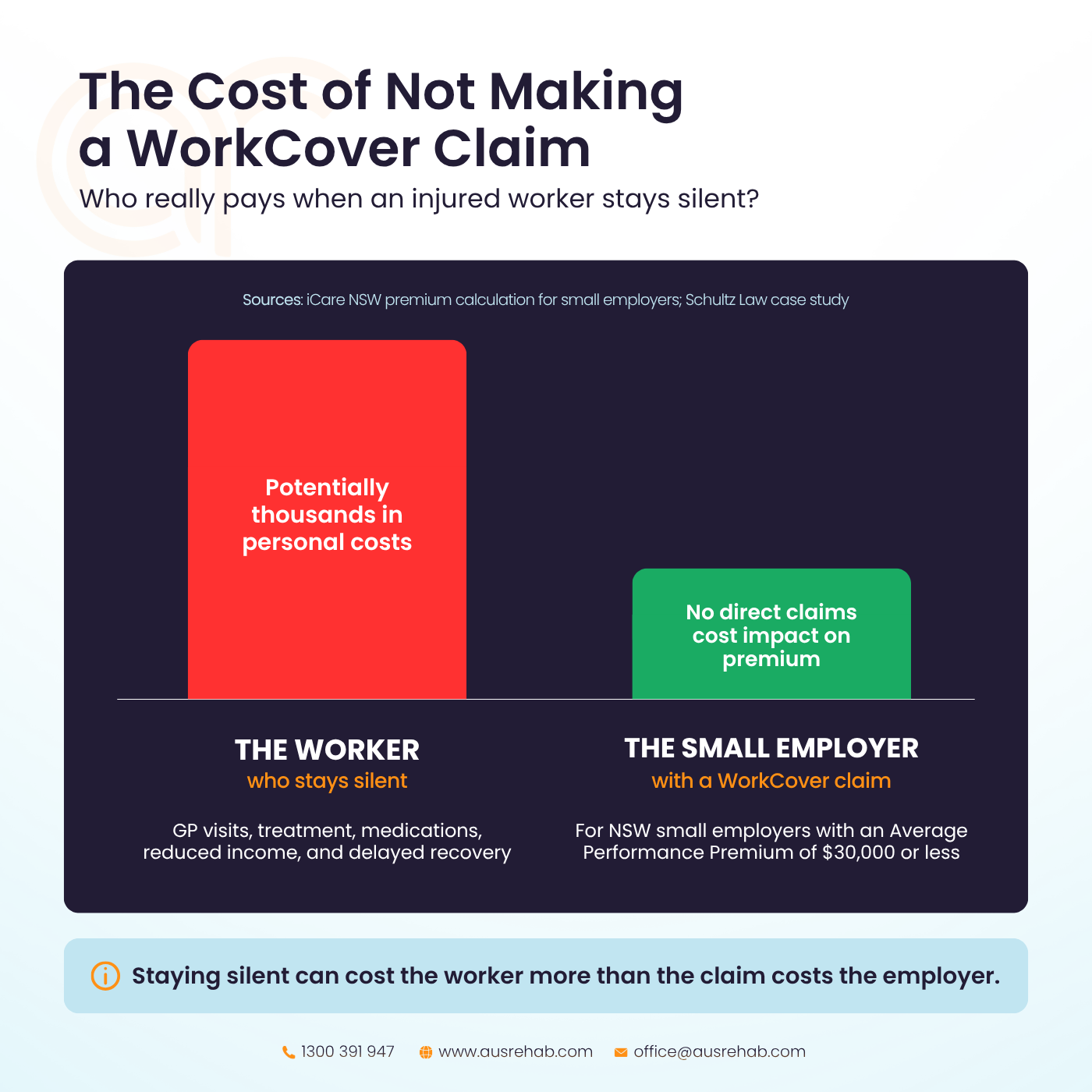
The problem is that the cost usually falls on the injured worker first. Treatment, lost income, reduced hours, and delayed recovery can become much bigger than expected.
Financial Impact of Claiming vs Not Claiming
Financial Impact of Claiming vs Not Claiming
| The Injured Worker, No Claim | The Employer, With Claim |
|---|---|
|
Example scenario: 27-year-old worker with a work injury needing ongoing treatment |
Example scenario: Small business with a workers’ compensation claim lodged |
|
Financial impact: GP visits, physiotherapy, chiropractic care, medications, and specialist appointments may be paid out of pocket for months or years. |
Financial impact: In NSW, small employer premiums are not directly impacted by individual claims costs. For medium to large employers, claims costs can affect premiums over time. |
Under iCare NSW workers’ compensation, small employers are generally those with an average performance premium of $30,000 or less. iCare states that claims costs do not directly impact its premium. Medium to large employers are treated differently, as claims performance can affect premium calculations.
This does not mean claims have no business impact. Employers still need to manage the injury properly. They may need to provide suitable duties, communicate with the insurer, and support return-to-work planning.
It does mean the fear is often bigger than the immediate financial reality. The decision that feels safest, staying quiet and absorbing the cost yourself, can become the most expensive one. Not just financially, but physically and emotionally.
How AusRehab Can Help
Recovering from a workplace injury can feel easier when the right support is in place early. You should not have to manage your treatment, employer updates, insurer communication, and return-to-work planning on your own.
AusRehab helps bring the full picture together. Our team works with injured workers, employers, treating doctors, and insurers to support safe recovery and practical work outcomes.
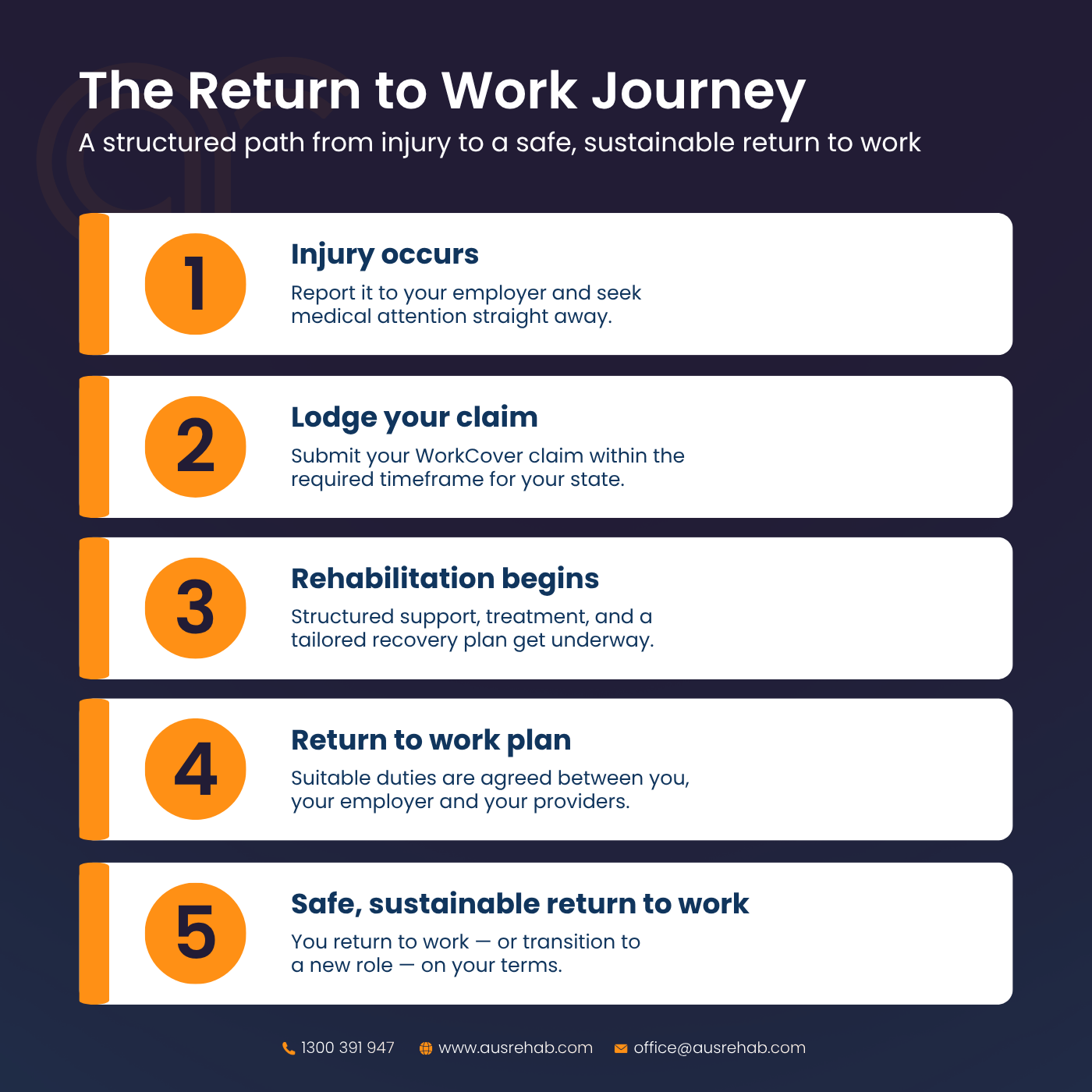
Through workplace rehabilitation support, you can get guidance on what work is safe, what duties may need to change, and what steps can help you return with confidence. This may include a structured return-to-work plan that NSW workers can follow with their employer and treating team.
Functional capacity evaluations can also help clarify what you can safely do. These assessments look at your current physical capacity and help guide suitable duties, work restrictions, and recovery planning.
If returning to your previous role is not the right option, vocational rehabilitation may help. This can include job-seeking support, skills review, role matching, and guidance for moving into safer work.
Early intervention matters. The sooner support starts, the easier it is to reduce confusion, prevent delays, and build a recovery plan that fits your real capacity.
Not Sure Where to Start?
If you have been injured at work or your recovery has stalled, talk to an AusRehab workplace rehabilitation specialist. We can show you what a practical return-to-work plan could look like for your situation.
Ready to Understand Your Next Step?
If you have been injured at work or know someone who has, and you are not sure what the options are, book an appointment with our workers’ comp telehealth doctor.
We can help you understand what a return to work and return to life could look like for your situation.
That one conversation could change the direction of your recovery.
Frequently Asked Questions (FAQs)
Does a WorkCover claim show up on a background check?
No. Your WorkCover history includes private health and claim information. It does not appear on standard employment checks, reference checks, or background screenings. A future employer cannot access it without your consent.
Do I have to tell a future employer about my WorkCover claim?
No. You do not have to volunteer your claim history. You may need to disclose a relevant pre-existing injury if the employer asks in writing and the injury could affect your ability to perform the role safely.
What happens to my WorkCover claim if I leave my employer?
Your claim does not automatically end because you leave your employer. Medical expenses, weekly payments, and rehabilitation support may continue depending on your capacity, claim status, and state scheme rules. Workers’ compensation can cover wages, medical expenses, and rehabilitation where eligible.
How long does a WorkCover claim stay on record?
There is no simple public expiry date for a claim record held by the insurer. This information is not publicly accessible and cannot be seen by future employers. Your claim history remains confidential within the relevant workers’ compensation system.
Can I make a WorkCover claim if I am a casual worker?
Yes. Casual workers can make a WorkCover claim if the injury or illness happened in connection with work. Your employment type does not automatically stop you from accessing medical support, weekly payments, or rehabilitation where eligible.
What is the time limit for lodging a WorkCover claim in NSW?
In NSW, a workers’ compensation claim should usually be made within 6 months of the injury date or the date of death. Extensions may apply in limited circumstances. Report the injury and seek advice as early as possible.
What should I do after a manual handling injury at work?
Stop the task, report the incident, seek medical care, ask about a Certificate of Capacity if work is affected, keep records, and ask about workplace rehabilitation or return-to-work support.
How does AusRehab help with manual handling injuries?
AusRehab helps through manual handling training, workplace rehabilitation, functional capacity evaluations, ADL assessments, ergonomic support, and return-to-work planning. The focus is practical support that matches the worker’s capacity, duties, and workplace demands.