
Prefer to Listen? Play this quick summary instead!
Poor ergonomics at work is one of the most common and often overlooked causes of workplace injury. Many issues begin as minor discomfort during daily tasks. Over time, these small signs can develop into more serious musculoskeletal injuries that affect the neck, back, shoulders, and upper limbs.
For many workplaces, the early warning signs are easy to ignore. Discomfort may be seen as part of the job or dismissed as temporary. However, ongoing strain can reduce productivity, increase fatigue, and lead to higher workers’ compensation claims if left unaddressed.
Recognising the early signs of poor ergonomics at work is important for both employees and employers. Early awareness supports better risk management and allows workplaces to take action before minor issues become long-term injuries.
What Are Ergonomic Risks in the Workplace?
Ergonomic risks occur when a work setup or task does not match the physical needs of the worker.
In a workplace setting, these ergonomic risks often come from poor workstation setup, repetitive tasks, awkward or sustained postures, and unsuitable equipment. These conditions place continuous stress on the body during everyday work activities.
Over time, this mismatch between the worker and the task can lead to physical strain and fatigue. If not addressed, it may result in injuries affecting the neck, back, shoulders, and upper limbs. These issues can develop gradually, which makes them harder to detect in the early stages.
Understanding ergonomic risks is the first step in preventing injury. Identifying how work tasks and environments impact the body allows workplaces to make practical adjustments that reduce strain and improve safety.
Where Ergonomic Risks Commonly Occur
Ergonomic risks can occur in a wide range of work environments. These risks are not limited to physically demanding roles. They are often present in everyday tasks across different industries.
Office workstations are a common source of ergonomic risk. Poor chair support, incorrect screen height, and prolonged sitting can lead to neck, back, and shoulder strain.
Warehouse and manual handling roles involve repetitive lifting, carrying, and awkward movements. Without proper technique or support, these tasks can increase the risk of musculoskeletal injuries.
Remote or work-from-home setups often lack proper ergonomic design. Many workers use temporary workstations that do not support good posture or reduce strain.
Incorrect driving ergonomics can create risks due to prolonged sitting, limited movement, and poor vehicle setup. These conditions can lead to fatigue and discomfort over time.
💡 For a deeper understanding of how office and remote setups can impact posture and comfort, read Why Every Office Worker Needs an Ergonomic Assessment.
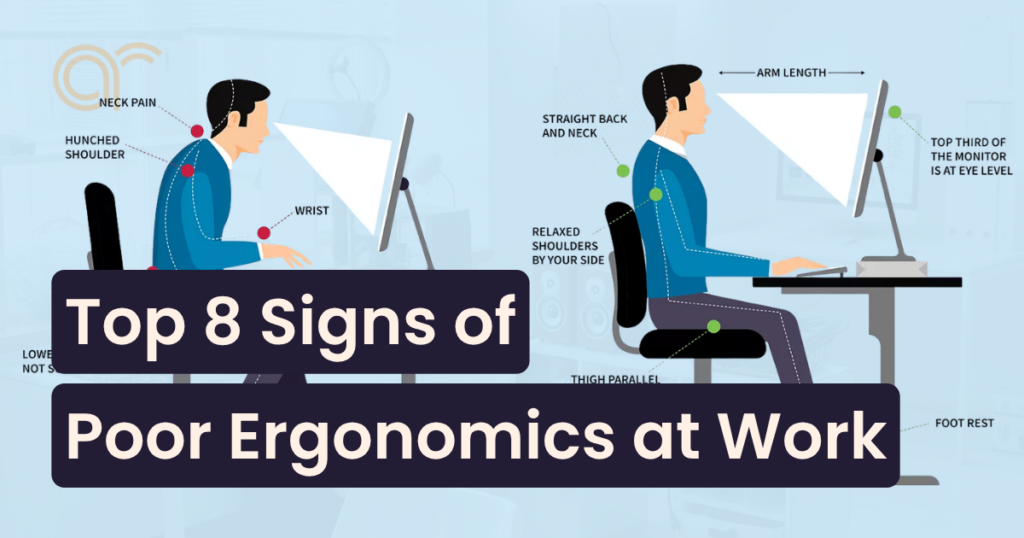
Top 8 Signs of Poor Ergonomics at Work
Recognising the signs of poor ergonomics early can help prevent minor discomfort from developing into serious workplace injuries. These signs often appear gradually but can have a direct impact on employee well-being and business performance.
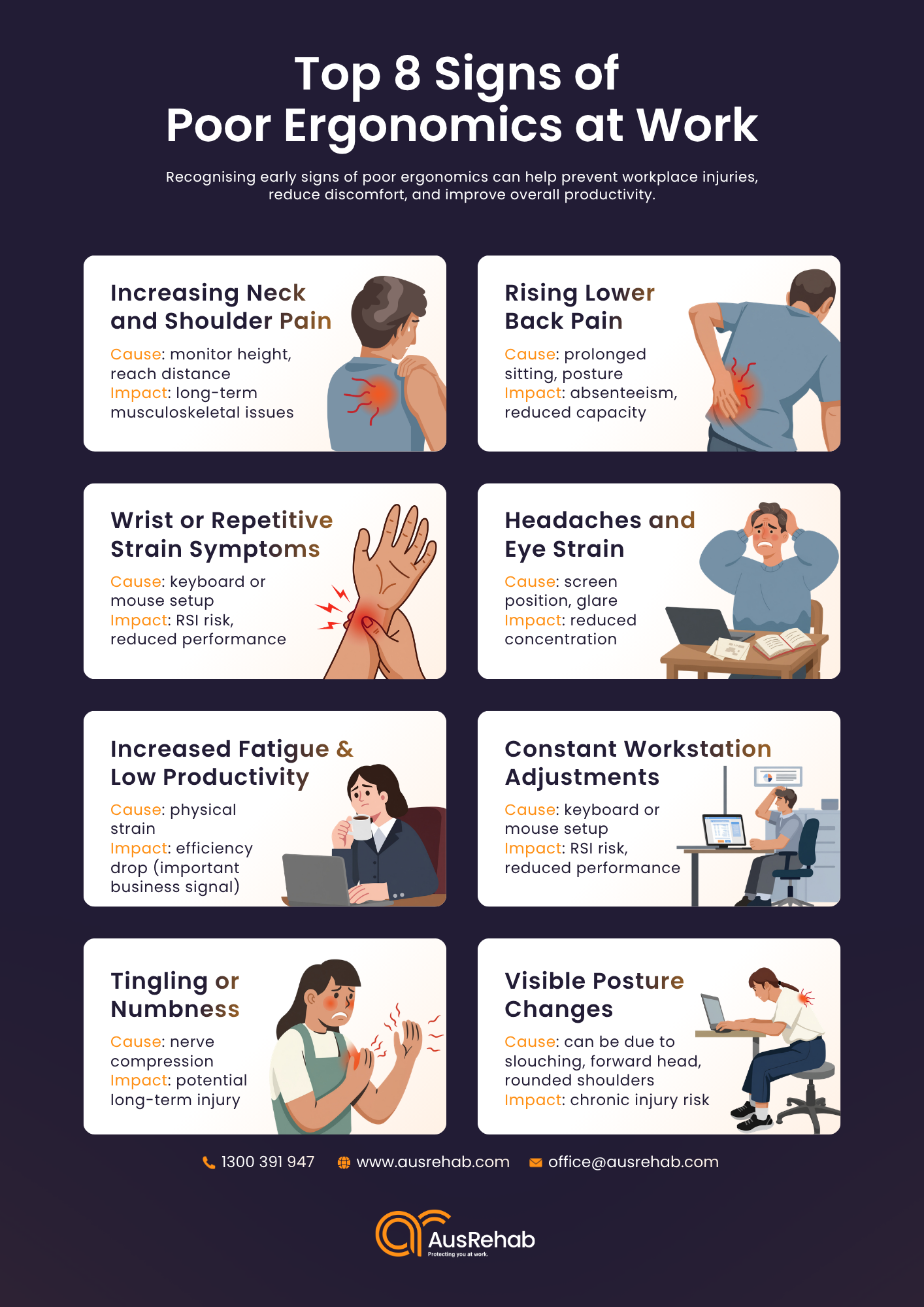
1. Increasing Neck and Shoulder Pain
Persistent discomfort in the neck and shoulders is often caused by incorrect monitor height or extended reach distances. Over time, this can lead to long-term musculoskeletal issues and reduced work capacity.
2. Rising Lower Back Pain
Lower back pain is commonly linked to prolonged sitting and poor posture. This can contribute to absenteeism and limit an employee’s ability to perform tasks effectively.
To learn how to reduce risks linked to back strain and posture, read How to Prevent Back Injuries in the Workplace.
3. Wrist or Repetitive Strain Symptoms
Pain or discomfort in the wrists may result from poor keyboard and mouse positioning or repetitive tasks. This increases the risk of repetitive strain injuries and can reduce overall performance.
4. Headaches and Eye Strain
Improper screen positioning, glare, and poor lighting can lead to headaches and eye strain. These symptoms often affect concentration and reduce productivity.
For more on how lighting and screen setup affect eye strain and fatigue, explore Common Illnesses and Injuries Due to Poor Workplace Lighting.
5. Increased Fatigue and Reduced Productivity
Ongoing physical strain can lead to fatigue, even during low-intensity tasks. This is a key business signal, as reduced energy levels can directly impact efficiency and output.
Discover proven strategies to manage fatigue and stress at work. Read Top Strategies to Manage Fatigue and Stress in the Workplace.
6. Constant Workstation Adjustments
Frequent adjustments to chairs, screens, or equipment may indicate that the workstation is not properly set up. This can lead to ongoing discomfort and inefficiency.
7. Tingling or Numbness
Tingling sensations in the hands, arms, or legs may be caused by nerve compression. If left unaddressed, this can develop into more serious long-term injuries.
8. Visible Posture Changes
Posture changes such as slouching, forward head position, or rounded shoulders are clear indicators of poor ergonomics. These can contribute to chronic strain and long-term injury risk.
Spot the Signs Early
Minor discomfort is often the first warning sign of a larger workplace risk. Early ergonomic intervention can help prevent injuries, reduce downtime, and improve productivity across the workplace.
Common Signs of Poor Ergonomics and Their Impact
Early Signs of Poor Ergonomics in the Workplace
| Sign | Likely Cause | Business Impact |
|---|---|---|
| Neck pain | Poor monitor height | Reduced productivity |
| Back pain | Poor posture | Absenteeism |
| RSI symptoms | Repetitive tasks | Injury risk |
| Eye strain | Screen setup | Reduced focus |
| Fatigue | Physical strain | Performance drop |
| Adjustments | Poor workstation fit | Inefficiency |
| Numbness | Nerve pressure | Medical risk |
| Posture changes | Long-term strain | Chronic issues |
Quick Ergonomic Self-Check for Workstations
A simple self-check can help identify whether your current workstation setup is contributing to discomfort or strain. Small adjustments can make a significant difference in reducing ergonomic risks.
Use this quick checklist to assess your setup:
- Is your screen at eye level?
- Are your feet flat on the floor?
- Are your shoulders relaxed while typing?
- Is your keyboard and mouse within easy reach?
- Do you feel discomfort after long periods of work?
If you answered “no” to multiple questions, your setup may need adjustment.
Why Poor Ergonomics Is a Business Risk
Poor ergonomics at work is not only a health issue. It is also a business risk that can affect performance, costs, and long-term workforce sustainability.
When ergonomic risks are not addressed, workplaces may see an increase in injuries such as back pain, repetitive strain injuries, and posture-related conditions. These issues can lead to higher workers’ compensation claims and greater operational costs.
Reduced productivity is another common impact. Employees who experience discomfort or fatigue are less likely to perform at their best. This can affect efficiency, work quality, and overall output. Absenteeism may also increase as injuries become more severe or persistent.
Over time, poor ergonomics can affect long-term employee health. This can result in ongoing medical needs and reduced capacity to work.
Prevention is significantly more effective than managing injuries later.
How Ergonomic Assessments Help Reduce Risk
An ergonomic assessment workplace approach focuses on identifying and reducing risks before they lead to injury. It looks at how work tasks, equipment, and environments interact with the physical needs of employees.
Ergonomic assessments help identify risk factors such as poor posture, repetitive movements, and unsuitable workstation setups. Once these risks are identified, practical adjustments can be made to improve posture, reduce strain, and support safer work practices.
These assessments are important in injury prevention. By addressing issues early, workplaces can reduce the likelihood of musculoskeletal injuries and improve overall safety outcomes. This aligns with workplace health and safety obligations by promoting proactive risk management.
Improving ergonomics not only prevents injuries. It also supports comfort, efficiency, and long-term employee well-being.
💡 To learn how ergonomic assessments improve workplace safety and performance, read Ergonomic Assessments: Your Key to Enhanced Workspaces.
When Should Employers Act?
Employers should act early when signs of ergonomic risks in the workplace begin to appear. Delaying action can allow minor issues to develop into more serious injuries that affect both employees and business performance.
Common triggers include multiple complaints of discomfort, an increase in minor injuries, or patterns of fatigue and reduced productivity. Changes in work environments, such as new hybrid or work-from-home setups, can also introduce new ergonomic risks that require attention. Return-to-work cases are another important point for review, as workers may need adjusted setups to support safe recovery.
Acting at the right time allows employers to address risks before they escalate. It also supports compliance with workplace safety obligations and promotes a healthier work environment.
Early intervention reduces long-term cost and risk.
How AusRehab Supports Workplace Ergonomics
AusRehab supports organisations in managing workplace ergonomic assessment needs through a proactive and practical approach. The focus is on identifying risks early and implementing solutions that improve safety and performance.
Services include workstation assessments that evaluate how employees interact with their work environment. Risk identification helps highlight areas where poor ergonomics may lead to discomfort or injury. Based on these findings, tailored recommendations are provided to improve posture, reduce strain, and optimise work setups.
AusRehab also supports return-to-work planning by ensuring that work environments align with an employee’s current capacity. This helps reduce the risk of re-injury and supports a safe and sustainable return to work.
As a proactive partner, AusRehab helps workplaces prevent injuries, improve employee well-being, and maintain long-term productivity.
💡 To understand how rehabilitation support works during recovery, read How Rehab Providers Support Your Recovery at Work.
Improve Workplace Ergonomics Before Injuries Occur
Noticing these signs in your workplace?
Small signs such as discomfort, fatigue, or posture changes can quickly develop into more serious injuries if ignored. These early indicators often point to poor ergonomics at work and should not be overlooked.
Taking action early allows workplaces to address risks before they affect employee health and performance. An ergonomic assessment can help identify problem areas and provide practical recommendations to improve safety and productivity.
Proactive assessments support better work setups, reduce strain, and help prevent long-term injuries. They also create a safer and more efficient environment for employees.
Speak with our team to understand how your workplace setup can be improved.
Frequently Asked Questions (FAQs)
What are the signs of poor ergonomics at work?
Common signs of poor ergonomics include neck and shoulder pain, lower back discomfort, wrist strain, eye fatigue, and visible posture changes. These symptoms often begin as mild discomfort but can develop into more serious injuries if ignored. Early identification allows workplaces to take action before these issues affect performance and safety.
What causes ergonomic risks in the workplace?
Ergonomic risks and workplace issues occur when work tasks or environments do not match the physical needs of employees. Common causes include poor workstation setup, repetitive movements, sustained awkward postures, and unsuitable equipment. These factors create ongoing strain that can lead to injury over time.
How does poor ergonomics affect employees?
Poor ergonomics at work can lead to fatigue, discomfort, reduced concentration, and increased risk of musculoskeletal injuries. Over time, this can affect an employee’s ability to work safely and efficiently. Addressing these issues early supports both well-being and long-term work capacity.
What are common ergonomic injuries?
Common ergonomic injuries include back pain, neck and shoulder strain, repetitive strain injuries, and nerve-related conditions such as tingling or numbness. These injuries often develop gradually due to repeated stress and poor work positioning.
When should an ergonomic assessment be done?
An ergonomic assessment of the workplace should be done when there are repeated complaints of discomfort, an increase in minor injuries, or changes in work setup, such as hybrid or remote work. It is also important during return-to-work planning. Early assessment helps prevent minor issues from becoming long-term injuries.
How can workplaces prevent ergonomic injuries?
Workplaces can prevent injuries by improving workstation setup, encouraging proper posture, reducing repetitive strain, and promoting regular movement. Proactive risk identification and early intervention are key. Support from providers like AusRehab can help implement practical solutions that reduce strain and improve safety.
What is an ergonomic assessment?
An ergonomic assessment is a structured review of a worker’s tasks, equipment, and environment. It identifies risk factors and provides practical recommendations to improve posture, reduce strain, and prevent injury. AusRehab offers ergonomic assessments that help workplaces create safer and more efficient setups.
Why is ergonomics important in the workplace?
Ergonomics is important because it reduces injury risk, improves comfort, and supports productivity. A well-designed work environment allows employees to perform tasks safely and efficiently. Investing in ergonomics also helps businesses reduce downtime and maintain long-term workforce health.