
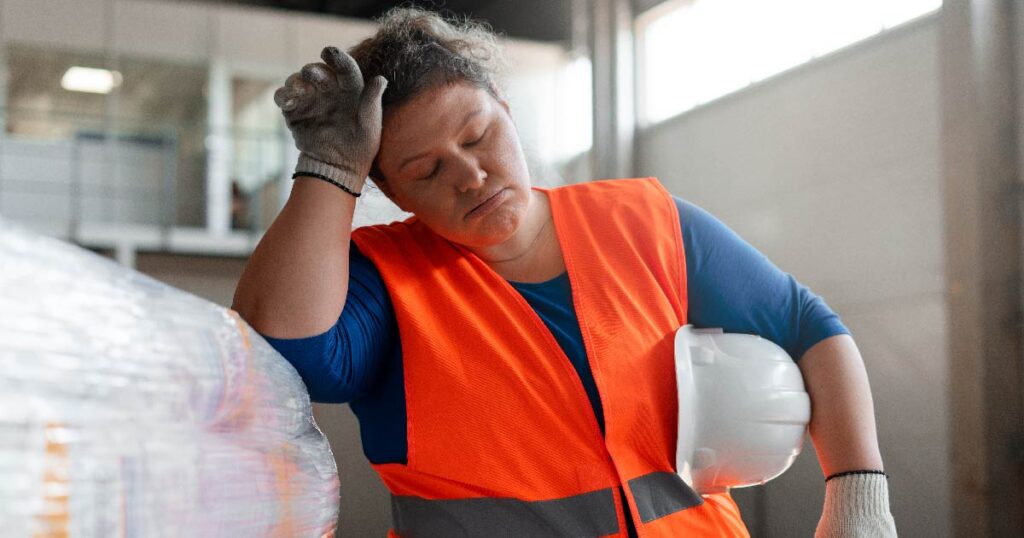
Fatigue and stress are two of the most overlooked risks in the modern workplace. Left unmanaged, they can lead to decreased productivity, increased absenteeism, and a significantly higher risk of workplace injuries. In fact, in Australia, fatigue is responsible for approximately 13% of workplace injuries each year. In this guide, we’ll share proven workplace fatigue management tips and effective workplace stress management strategies to help your team stay safe, productive, and engaged.
Why Fatigue and Stress Are Major Workplace Risks
Understanding Physical and Mental Fatigue at Work
Fatigue is more than just feeling tired or drowsy. It is a state of mental, physical, or emotional exhaustion that impairs performance and reduces the ability to work safely and effectively. Fatigue can develop when someone is overworked, lacks quality sleep, or experiences disruption to their internal body clock.
Workplace fatigue is recognised as a Work Health and Safety (WHS) issue. Employers have a legal duty to eliminate or minimise the risks of fatigue as far as reasonably practicable, and workers have a duty to take reasonable care for their own health and safety and that of others.
Fatigue is particularly dangerous because being awake for 17 hours impairs performance at a level equivalent to a 0.05 blood alcohol concentration. It can also lead to micro-sleeps, where employees briefly lose awareness without realising it.
Fatigue is a major workplace safety hazard, especially in jobs that involve long shifts, high pressure, or tasks where safety is critical. Learn how fatigue contributes to workplace accidents.
The Link Between Fatigue, Stress, and Workplace Injuries
Fatigue significantly increases the likelihood of workplace accidents, particularly when operating machinery, driving, working at heights, or performing hazardous tasks. It is estimated that fatigue contributes to nearly 10,000 serious workplace injuries each year in Australia, costing the economy over $5 billion in lost productivity and healthcare expenses.
Many of the most common workplace injuries across Australia can be directly linked to concentration lapses caused by fatigue.
Impact on Return-to-Work and Recovery
Supporting recovery after fatigue-related injuries is crucial, as post-injury fatigue can significantly slow healing and increase the risk of re-injury. Providing employees with tailored fatigue management strategies is essential for a safe and sustainable return to work. Effective recovery plans should address physical, mental, and emotional fatigue.
Common Causes of Workplace Fatigue and Stress
Shift Work and Poor Rostering
Fatigue in shift work is a major contributor to burnout and increased health risks. Around 12.4% of Australian workers consistently work 50 hours or more per week. Working 55 or more hours a week increases the risk of stroke by 35% and the risk of dying from ischemic heart disease by 17%.
Safe rostering strategies and balanced schedules are essential to mitigating fatigue risks. High-risk groups include shift workers, fly-in fly-out workers, seasonal workers, emergency services, medical professionals, and night workers.
Workplace Ergonomics and Manual Tasks
Poor manual handling practices and poor ergonomics are major contributors to physical fatigue and musculoskeletal strain. Consider ergonomic adjustments as a key strategy to reduce fatigue, such as improving workstations and conducting ergonomic assessments. Manual handling training can also significantly lower the risk of injury and boost productivity in physically demanding roles.
High Workloads and Emotional Strain
Heavy workloads, emotionally demanding tasks, and unresolved workplace tension management can lead to burnout and emotional fatigue. Australian workers, particularly in healthcare, education, and retail, report some of the highest rates of emotional exhaustion, with burnout rates among knowledge workers reaching as high as 82%.
Effective Strategies to Manage Fatigue and Boost Productivity
Safe Rostering and Workload Adjustments
Implementing practical fatigue management strategies is essential for proactively reducing fatigue risks. Safe rostering should:
Limit consecutive night shifts
Minimise excessively long shifts
Allow sufficient recovery time between shifts
Fatigue can be caused by shift work, heavy workloads, and stress at work. This stress, called psychosocial risk, happens when people feel overwhelmed, unsupported, or have little control over their work. All of these problems are linked and should be solved together.
Hydration, Nutrition, and Rest Breaks
Poor hydration and nutrition contribute directly to fatigue. Workplaces should encourage regular rest breaks, provide access to water stations, and promote healthy eating options to support both hydration and productivity throughout the workday.
Stress Management Activities for Employees
Providing stress management activities for employees such as mindfulness sessions, resilience workshops, and mental health resources can help reduce emotional strain. Simple changes like introducing quiet spaces, flexible hours, and supportive leadership can also reduce workplace stress.
Tools for Physically Demanding Roles
For employees in physically demanding roles, providing mechanical lifting aids, job rotation, and ergonomic supports are key productivity tips for physically demanding jobs. Fatigue management education should also be included in onboarding and ongoing training to ensure that employees know how to manage their workload safely.
How Ergonomics Supports Long-Term Health and Productivity
Custom Assessments for Injury Prevention
Ergonomic assessments tailored to specific job roles can significantly reduce workplace fatigue by improving task design, reducing strain, and enhancing employee comfort.
Creating Links: A Case for Ergonomic Success
Workplaces that implement ergonomic adjustments have reported measurable reductions in fatigue and injury rates, along with improved employee satisfaction and productivity. AusRehab partners with Creating Links to build safer, healthier, and more productive workplaces through practical ergonomic solutions. We work closely with their teams to assess work environments, improve posture and work habits, and reduce the risk of fatigue and injury. Together, we focus on improving workstation setups, promoting safe work practices, and providing tailored ergonomic advice that makes a real difference.
Self-Assessment and Education Tools
Providing workplace fatigue solutions such as self-assessment tools, fatigue reporting procedures, and employee education ensures that fatigue is managed proactively and that workers feel supported in raising concerns.
Implementing a Fatigue Risk Management System (FRMS)
A Fatigue Risk Management System (FRMS) is a structured and practical way to manage fatigue at work. It is especially important in safety-critical industries like aviation, rail, and maritime, where fatigue can seriously affect safety, work performance, and people’s health.
An FRMS helps organisations in these industries, as well as their workers, to identify, monitor, and control fatigue risks before they lead to accidents or health issues.
Unlike basic work-hour limits, a Fatigue Risk Management System (FRMS) is fully integrated into daily tasks, policies, and decision-making. It emphasises proactive fatigue prevention and continuous improvement to keep workers safe and workplaces operating effectively.
Why FRMS Matters in WHS Compliance
Under Australian Work Health and Safety (WHS) laws, employers must do everything they can, as far as reasonably possible, to eliminate or reduce the risk of fatigue. Fatigue risk management in the workplace includes talking with employees, improving work schedules, and managing job demands to prevent fatigue from becoming a safety issue.
A good Fatigue Risk Management System (FRMS) helps organisations meet these legal duties by making fatigue management part of daily operations. It not only supports WHS compliance but also helps build workplaces that are safer, healthier, and more productive for everyone.
Steps to Build a Fatigue-Resilient Workplace
A practical guide for managing the risk of fatigue at work includes:
Monitoring fatigue symptoms and early warning signs
Developing safe rostering practices with sufficient recovery periods
Providing regular training and consultation on fatigue risks
Redesigning tasks to reduce physical, emotional, and cognitive demands
Partner With AusRehab for Safer Workplaces
Fatigue and stress don’t have to be part of the job. At AusRehab, we help organisations reduce risks and boost productivity at work through tailored ergonomic assessments and practical fatigue management strategies designed to meet your team’s unique needs.
Book an Ergonomic Assessment
We offer practical, evidence-based solutions to enhance wellbeing at work:
On-site ergonomic evaluations
Custom workplace adjustments
Self-assessment tools and education
Support for injury prevention and long-term health
Contact Us Today
Join forward-thinking workplaces like Creating Links in building safer, healthier, and more productive environments—one desk at a time.
📞 1300 391 947
📧 office@ausrehab.com
🔗 Book an Ergonomic Assessment.
Frequently Asked Questions
What causes workplace fatigue?
Workplace fatigue can be caused by long hours, shift work (schedules outside regular daytime hours, such as night or rotating shifts), inadequate rest breaks, high physical or mental job demands, poor ergonomics, and psychosocial hazards. It can also build up over time due to stress, poor work-life balance, or long commutes. Understanding the causes of workplace fatigue is an important part of building safer, healthier workplaces.
What 6 strategies could be used to manage fatigue?
Six effective ways to manage fatigue include safe rostering, regular rest breaks, encouraging hydration and proper nutrition, improving ergonomics, supporting stress management, and implementing a fatigue risk management system (FRMS). For more on workplace fatigue management, it’s helpful to consider strategies that address both physical and mental demands.
How can employers reduce fatigue at work?
Employers can reduce fatigue by improving work schedules, offering regular breaks, promoting hydration, lowering job pressures, and providing ergonomic support. Conducting ergonomic assessments is especially useful to help reduce physical strain and improve worker comfort.
What is a fatigue risk management system (FRMS)?
A fatigue risk management system (FRMS) is a structured approach that helps organisations proactively identify and control fatigue risks. It is a key part of fatigue risk management in the workplace and supports safe rostering, monitoring fatigue, and meeting legal safety obligations.
Can hydration improve workplace productivity?
Yes, staying hydrated improves concentration and reduces fatigue, which helps maintain productivity throughout the day. Encouraging proper hydration is a simple and effective part of overall workplace fatigue management.
How to manage fatigue in physically demanding jobs?
Fatigue in physically demanding jobs can be managed by rotating tasks, using mechanical aids, providing regular breaks, and offering appropriate training. Investing in manual handling training can significantly reduce physical fatigue and improve safety for workers in high-demand roles.
How does fatigue affect recovery after injury?
Fatigue can slow recovery and increase the chance of re-injury if not carefully managed. Supporting workers with proper return-to-work planning and considering recovery at work is essential to ensure a safe and sustainable recovery process.
What are examples of safe rostering practices?
Safe rostering practices include limiting long shifts, allowing adequate rest between shifts, avoiding back-to-back night shifts, and making sure workers have enough time to recover. These are essential steps in managing fatigue and improving workplace safety.
How often should rest breaks be scheduled during shifts?
It’s generally recommended to schedule a 10–15-minute break every 2–3 hours, with longer rest periods for shifts longer than eight hours. These regular breaks are an important part of practical workplace fatigue management and help employees maintain focus and energy.
How does fatigue increase the risk of workplace injuries?
Fatigue can impair concentration, slow reaction times, and reduce physical coordination, all of which significantly increase the risk of workplace accidents. Fatigue is often overlooked as a contributing factor in many of the most common workplace injuries across Australia.
Tips for shift workers to reduce fatigue
Shift workers can reduce fatigue by maintaining consistent sleep routines, staying hydrated, eating balanced meals, taking regular rest breaks, and openly discussing fatigue concerns with their supervisors. Employers should also consider workplace rehabilitation providers to support staff who are struggling with fatigue or returning to work after an injury.