
Prefer to Listen? Play this quick summary instead!
Presenteeism at Work: Why Showing Up Sick May Be Doing More Harm Than Good
We’ve all done it – popped some paracetamol, dragged ourselves in, and told ourselves it’s fine. But what if that decision is quietly making things worse for you, your team, and the people around you?
🗒️ What Is Presenteeism?
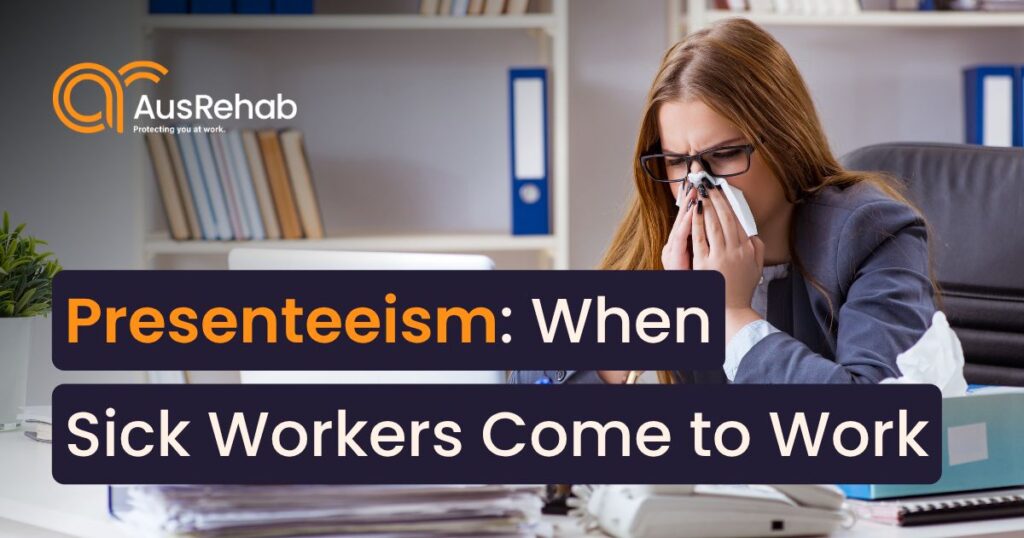
Presenteeism is when employees attend work despite being physically or mentally unwell and are unable to perform at their normal capacity. Unlike absenteeism, the person is present, but productivity, concentration, well-being, and recovery can all suffer
Understanding Presenteeism in the Workplace
Presenteeism occurs when employees continue working despite illness, injury, fatigue, stress, or other health concerns that affect their ability to perform effectively.
The term is often used in two ways: to describe the productivity loss associated with poor health, or the behaviour of attending work while unwell.
This article focuses on workplace presenteeism as a behaviour, specifically employees who continue working despite illness, pain, fatigue, stress, or mental health challenges.
The Worker Who Never Calls In Sick
Most workplaces have an employee who rarely takes a sick day. They continue working through illness, fatigue, pain, or stress because they do not want to fall behind or let others down.
While this is often viewed as dedication, presenteeism highlights the risks of working while sick. Reduced concentration, slower recovery, lower productivity, and increased mistakes can all affect both the employee and the organisation.
Because the employee is still present, the impact is often overlooked.
Why Showing Up Sick Isn’t Always the Right Choice
Many employees see working while sick as the responsible option. However, continuing to work when health is compromised can affect decision-making, communication, safety, and recovery.
Workplace presenteeism is often mistaken for commitment, but attendance alone is not a measure of performance or employee wellbeing.
Supporting employee wellbeing means recognising when rest, treatment, or time away from work may be the better option for both the worker and the organisation.
Who Is Most Likely to Keep Working When They Should Not?
Working while sick is not random. Some workers are more likely to keep showing up because of financial pressure, workplace expectations, caring responsibilities, or a strong sense of duty.
This does not mean they are careless about their health. In many cases, it means the workplace culture makes absence feel difficult.
Some employees worry about lost income. Others worry about letting patients, clients, students, or colleagues down. These pressures can make presenteeism feel like the only responsible option
Worker Groups Most at Risk of Presenteeism
| Risk | Why Presenteeism Is More Common | Worker Group |
|---|---|---|
| High | Strong attendance habits and lower sick leave use | Older workers |
| High | Often balance work with caring responsibilities | Women |
| High | Feel personally responsible and struggle to step away | Highly conscientious employees |
| High | Fear of lost income or job insecurity | Casual or insecure workers |
| High | Duty of care and concern about short-staffed teams | Nurses and healthcare workers |
| Medium | Ongoing client relationships and feeling hard to replace | Allied health professionals |
| Medium | Absence can disrupt students and colleagues | Teachers |
| Medium | Workload falls on someone else if they are absent | Employees with no backup cover |
📚 Case Study
Nurse Presenteeism in Australia
Australian research from Flinders University (Caring Futures Institute, 2022) found that nurses with caring responsibilities and those in public hospitals were more likely to work while unwell. This behaviour has been linked with patient falls, medication errors, and a poorer patient-safety culture. For nurses, the issue is not ignorance, but pressure. They may worry about leaving patients unsupported or making a short-staffed shift even harder.
Workplace Conditions That Encourage Presenteeism
Presenteeism is rarely the result of personal choice alone. In many cases, it is influenced by the environment in which employees work.
While a worker may need time to rest, recover, or seek support, a workplace culture that discourages absence can make doing so feel risky, inconvenient, or guilt-inducing.
Factors such as understaffing, excessive workloads, insecure employment, and unclear sick leave policies can create pressure to keep working, even when employees are unwell. In some organisations, attendance is valued so highly that employees feel compelled to work through illness rather than take time to recover.
A healthy workplace culture recognises that recovery is a normal part of maintaining employee wellbeing and performance. It encourages workers to prioritise their health when needed and does not equate taking sick leave with a lack of commitment.
| Workplace Factor | Impact |
|---|---|
| Casual employment | Fear of losing income |
| High workload | Fear of falling behind |
| No paid sick leave | Financial pressure |
| Poor culture | Guilt around absence |
| Remote work | Pressure to stay visible |
Presenteeism is often driven by workplace systems and expectations, not individual choices.
The Real Cost of Presenteeism
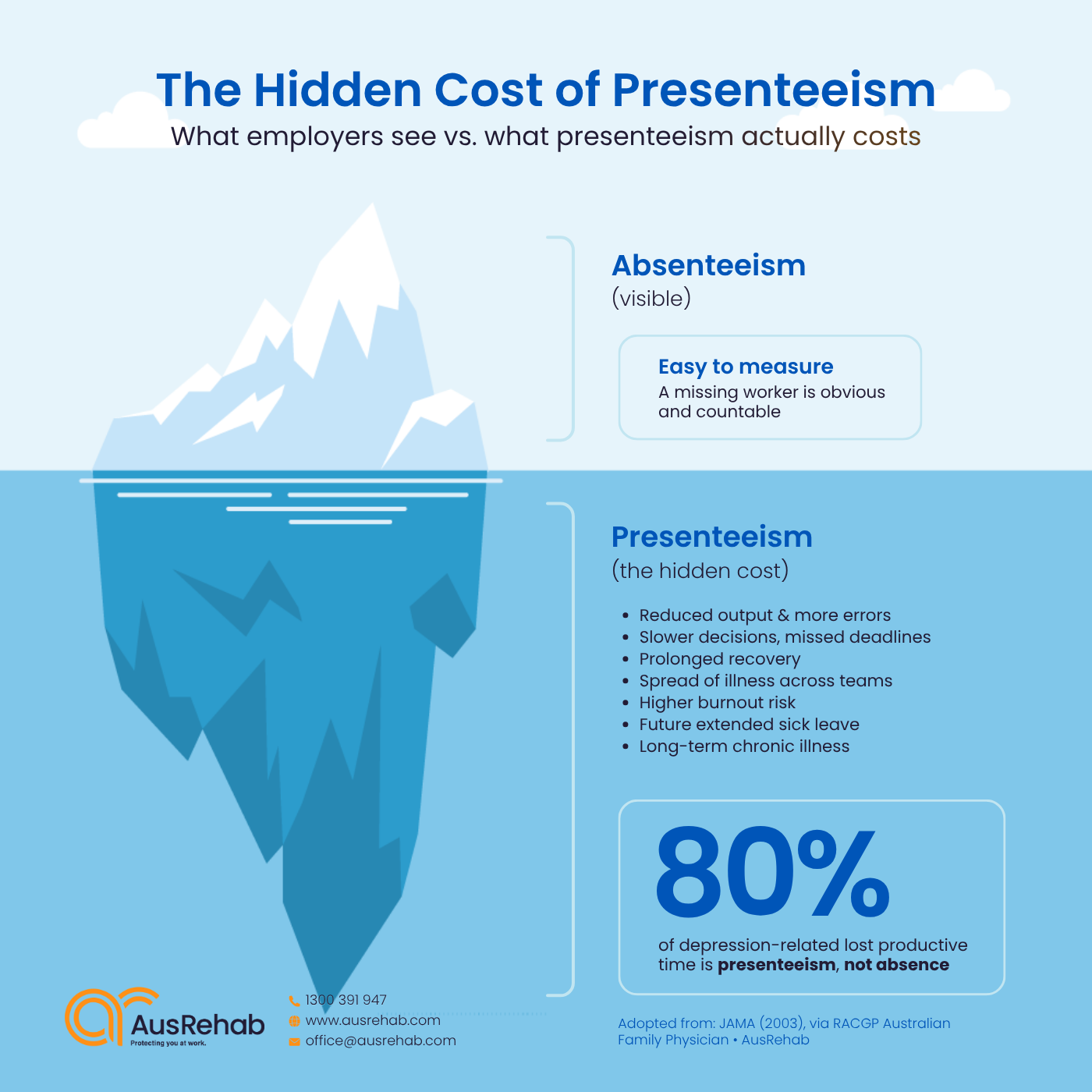
The cost of absence is easy to see, but the cost of presenteeism is often hidden. When employees are working while sick, they may be less focused, take longer to complete tasks, and be more likely to make mistakes.
Over time, the cost of presenteeism can affect both workplace productivity and workplace wellbeing. It can also delay recovery, leading to more serious health concerns and longer periods of reduced performance. While employees may be present, they may not be able to perform at their best.
Is Presenteeism Worse Than Absenteeism?
Often, yes. Absenteeism creates a clear and visible cost. Presenteeism is harder to detect. The employee is present but working below capacity. For some chronic and mental health conditions, lost productivity and delayed recovery may cost more than a short period of sick leave.
Presenteeism vs Taking Sick Leave
| Impact Area | Presenteeism, Working Sick | Taking Sick Leave |
|---|---|---|
| Productivity | Reduced output, more errors, and missed deadlines | No output during the absence |
| Health outcome | Risk of worsening symptoms and slower recovery | Time for rest, treatment, and recovery |
| Team impact | Possible illness spread and lower morale | Short-term disruption |
| Financial cost | Hidden productivity and recovery costs | Visible wage and absence costs |
| Long-term risk | Greater risk of burnout or extended absence | Lower risk when concerns are addressed early |
| Cost visibility | Hidden and difficult to measure | Visible and easier to track |
💡 Did You Know?
Historical US research published in JAMA (2003) found that 81% of lost productive time costs among workers with depression came from reduced performance while at work. The RACGP’s Australian Family Physician later cited this research when discussing the effects of presenteeism on workers and workplaces.
❌ The Productivity Myth
An employee working at half their normal capacity for ten days may create more disruption than an employee who takes two days of leave and returns ready to work. Strong workplace well-being means recognising when work is appropriate and when recovery needs to come first.
Digital Presenteeism: The New Workplace Risk
Hybrid and remote work have created a quieter form of presenteeism. Employees who once would have taken a sick day can now log in from home. They may answer messages, attend meetings, or complete tasks while unwell.
This is known as digital presenteeism. It can be difficult to notice because managers cannot always see the signs of illness, pain, or fatigue.
💻 What Is Digital Presenteeism?
Digital presenteeism happens when employees keep working while sick because they feel pressure to remain online, responsive, and visible. Being logged in does not always mean someone is well enough to work safely or effectively.
Why Remote Workers Feel Pressure to Stay Visible
Remote workers may feel pressure to prove they are productive and engaged. When expectations are unclear, employees may stay online or keep working while unwell to maintain visibility, even when rest would support recovery.
The “Always On” Culture
An always-on culture can make it difficult for employees to switch off. Checking emails after hours, responding during leave, and staying connected while unwell can blur the boundaries between work and personal time.
Over time, these behaviours can contribute to remote work burnout and undermine effective workplace fatigue management.
When Working From Home Delays Recovery
Working from home while sick may reduce the risk of spreading illness, but it does not eliminate the need for rest.
Continuing to work can prolong recovery, increase fatigue, and place additional physical strain on the body, particularly when workstations are not set up correctly.
| Traditional Presenteeism | Digital Presenteeism |
|---|---|
| Attending the workplace while sick | Logging in from home while sick |
| Visible to colleagues and managers | Often hidden from managers |
| May spread illness to others | Less infection risk, but recovery may still be affected |
| Physical presence is expected | An online presence is expected |
| Easier to identify | Often goes unnoticed |
Remote work may change where presenteeism happens. It does not remove the health, productivity, or recovery risks of working while unwell.
🔎 Myth vs Reality
Online Does Not Mean Well
Being online does not prove that someone is well enough to work. A worker may still be slower, less focused, and more prone to mistakes. Proper rest may support a faster and safer recovery. For practical support with remote desk setup and physical strain, explore AusRehab’s ergonomics training.
The Mental Health Complication
Mental health and presenteeism require a more careful approach. With a physical illness, the need for rest may be obvious. Mental health is often less clear.
For some people, work provides routine, connection, and purpose. These factors may support recovery. For others, the workplace may contribute to anxiety, stress, workplace burnout, or depression at work. The right approach depends on the person, the condition, and the workplace environment.
| Work Can Support Mental Health | Work Can Contribute to Poor Mental Health |
|---|---|
| Provides routine and structure | Excessive workload and unrealistic demands |
| Encourages social connection | Workplace bullying or conflict |
| Creates a sense of purpose | Poor management support |
| Supports confidence and identity | High stress and burnout |
| Allows gradual recovery for some workers | Limited flexibility or psychological safety |
Work can support recovery or make symptoms worse. The impact depends on the worker’s circumstances and the quality of the workplace environment.
For injured workers, a workers’ comp GP can assess current capacity. Where appropriate, the doctor may recommend suitable duties instead of treating capacity as simply fit or unfit.
A workplace health check may also help when fatigue, stress, or health concerns are affecting several employees or are becoming difficult to identify early.
Why Depression Is Closely Linked to Presenteeism
Depression is one of the most common drivers of presenteeism. Employees may continue attending work despite experiencing low energy, poor concentration, sleep disruption, or reduced confidence.
As the symptoms are not always visible, depression at work can be difficult to recognise. Many employees also hesitate to seek support due to stigma or fear of being judged, highlighting the strong connection between mental health and presenteeism.
💡 Did You Know?
Depression has a strong connection with presenteeism because employees may keep working without disclosing their symptoms or seeking help.
⚠️ Warning Signs That Work May Be Making It Worse
Persistent dread before work, worsening sleep, withdrawal from colleagues, rising errors, or symptoms that ease on days off and return at work. If these appear, it may be time to seek support or a workplace health check.
What Employers Can Do to Reduce Presenteeism
Reducing presenteeism requires more than telling employees to take care of themselves. Leave policies, leadership behaviour, workload, and workplace culture all influence whether people feel safe stepping away when they are unwell.
Employers can support employee well-being through clear expectations and practical early intervention. The aim is not to increase unnecessary absence, but to prevent illness, stress, or fatigue from becoming a larger health and productivity problem.
How Can Employers Reduce Presenteeism?
Employers can reduce presenteeism by: (1) documenting sick leave policies, (2) explaining leave entitlements, (3) leading by example, (4) providing EAP support, (5) setting remote-work boundaries, and (6) using well-being surveys and workplace health checks to identify concerns early.
| Action | Why It Matters |
|---|---|
| Put sick leave policies in writing | Removes uncertainty and confirms that appropriate leave is supported. |
| Explain leave entitlements | Helps employees understand their rights and available options. |
| Lead by example | Shows employees that health should not be ignored. |
| Provide EAP support | Offers confidential support for personal, emotional, or workplace concerns. |
| Set clear remote-work boundaries | Reduces pressure to remain online while unwell. |
| Run well-being surveys and workplace health checks | Identifies emerging concerns before they affect health or performance. |
Reducing presenteeism starts with a healthy workplace culture, clear policies, supportive leadership, and proactive well-being initiatives.
💡 Did You Know?
Under Australia’s National Employment Standards for leave entitlements, full-time employees receive 10 days of paid personal and carer’s leave each year. Part-time employees receive a pro-rata entitlement based on their ordinary working hours.
Why Leadership Behaviour Matters
Leadership plays an important role in reducing presenteeism. Employees take cues from how managers respond to illness, fatigue, and personal wellbeing.
When leaders work while visibly unwell or avoid taking leave, they may unintentionally signal that employees should do the same.
A healthy workplace culture supports recovery and recognises that taking leave when needed is a normal part of maintaining employee wellbeing.
Common Mistakes Managers Make
Some managers unintentionally encourage presenteeism by praising employees who never take sick leave or by contacting staff repeatedly during leave. These actions can create pressure to remain available and may discourage employees from prioritising their health.
Managers should also avoid equating absence with a lack of commitment. High workloads, limited support, and unclear expectations can all contribute to an unhealthy workplace culture.
Why Workplace Health Checks Matter
Many organisations notice health concerns only after performance drops or extended leave begins.
A workplace health check can identify fatigue, stress, musculoskeletal concerns, and broader health risks earlier. This gives employers a better opportunity to respond before the issue becomes harder to manage.
📞 Worried Presenteeism May Be Affecting Your Team?
A workplace health check can help identify risks early and strengthen your workplace well-being programs. Talk to AusRehab on 1300 391 947.
When Illness Becomes Injury: Where Workplace Rehabilitation Fits In
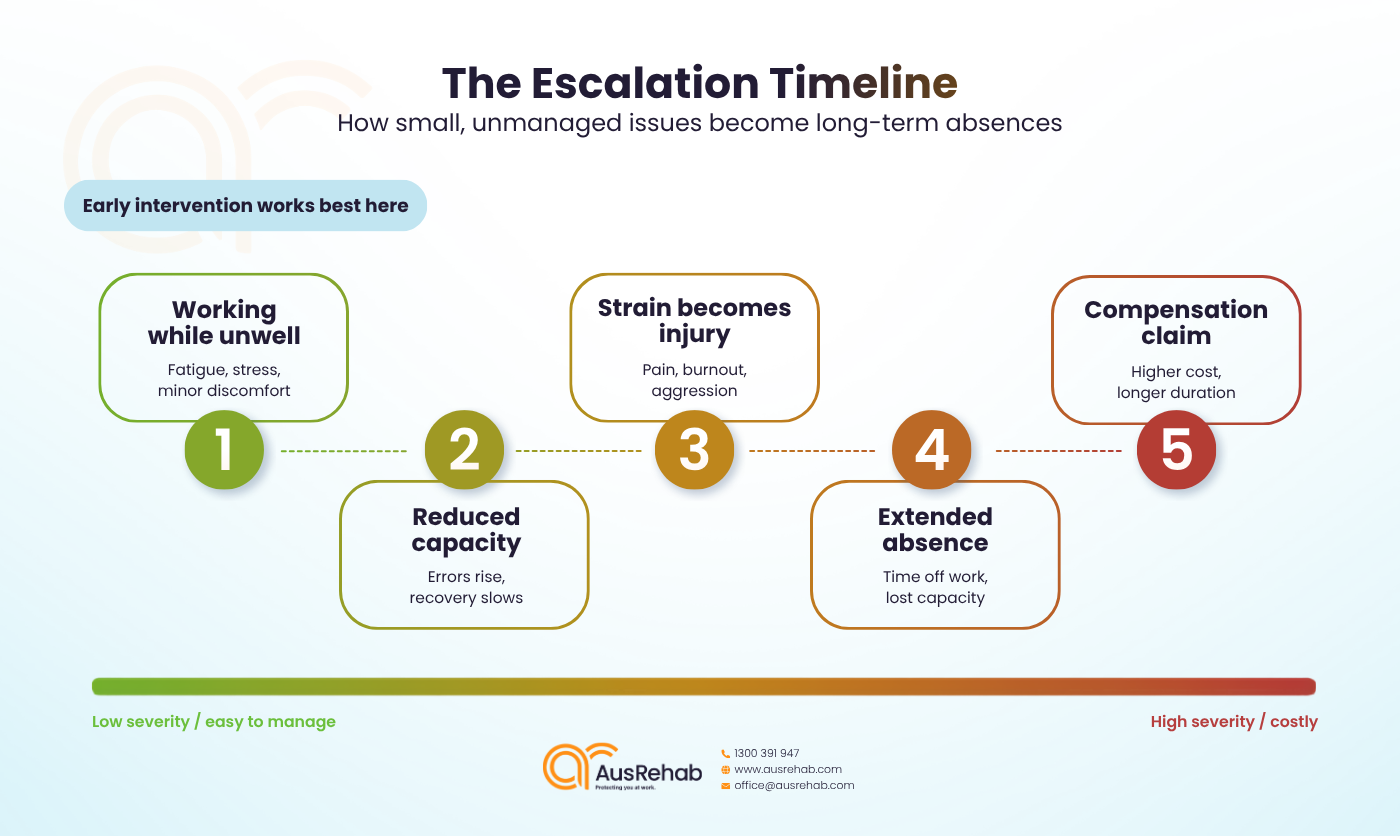
Presenteeism does not always result in injury, but the risk can increase when employees continue working through pain, fatigue, stress, or illness without appropriate support.
Over time, reduced concentration may lead to errors, ongoing strain can aggravate physical symptoms, and persistent stress may contribute to burnout or psychological injury.
This is where workplace rehabilitation can make a difference. Providing support early can help address barriers to recovery before they affect work capacity or lead to extended absence.
💼 FOR CASE MANAGERS AND INSURERS
Unmanaged presenteeism can act as an early warning sign. Workplace health checks, ergonomics training, and manual handling training can help identify risks before they escalate. Clear coordination between employers, treating doctors, insurers, and rehabilitation providers can also support better recovery outcomes.
How Workplace Rehabilitation Supports Early Intervention
| Support Area | Why It Matters | When to Act |
|---|---|---|
| Workplace health checks | Identify health and well-being risks before they escalate | Proactively and on an ongoing basis |
| Ergonomics training | Identify physical stressors and reduce strain risk | During role changes or remote-work setup |
| Manual handling training | Build safer practices and reduce musculoskeletal injury risk | Before an injury occurs |
| Return-to-work planning | Support a safe transition into suitable duties | At the first signs of difficulty or after injury |
| Early intervention support | Address concerns before they lead to long-term absence | As soon as a risk appears |
| Coordination with workers’ compensation GPs, employers, and insurers | Improve communication and recovery planning | Throughout recovery |
Why Early Intervention Matters
Small health concerns can become more difficult to manage when left unaddressed.
Early intervention support helps identify issues before they significantly affect a worker’s capacity. Depending on the situation, support may include treatment recommendations, workplace adjustments, or temporary suitable duties.
✅ Early support leads to better outcomes.
The sooner a health concern is identified, the greater the opportunity to maintain work capacity and reduce long-term absence.
Supporting Recovery, Not Just Return to Work
Effective return-to-work planning focuses on sustainable recovery rather than simply returning someone to work as quickly as possible. Plans should reflect the worker’s current capacity, include suitable duties, and provide clear communication between everyone involved.
The aim is to support a safe, durable return to work while protecting health, confidence, and long-term wellbeing.
How AusRehab Can Help
Presenteeism can increase the risk of health concerns becoming more serious when workers continue working without the right support. AusRehab works with employees, employers, treating professionals, and insurers to support recovery and maintain work capacity.
Our workplace rehabilitation services focus on practical strategies that help prevent injury escalation and support safe, sustainable work participation.
Services that can help address the risks associated with presenteeism include:
- Workplace health checks — identify emerging health concerns early and support employee wellbeing
- Ergonomics training — identify physical stressors and improve workstation setup across office, remote, and hybrid environments
- Manual handling training — help reduce musculoskeletal injury risks and promote safer work practices
- Return-to-work planning — provide suitable duties and structured support during recovery
- Early intervention support — address emerging issues before they affect work capacity or develop into long-term claims
- Coordination with treating doctors, employers and insurers — support communication and recovery throughout the rehabilitation process
Looking After Your Health Is Not a Sign of Weakness
The employee who always pushes through illness is usually trying to do the right thing. However, working through pain, fatigue, stress, or illness is not always the safest choice. Early action can protect health, maintain work capacity, and prevent smaller concerns from becoming long-term problems.
If you have been pushing through symptoms at work, or you are concerned about someone in your team, a closer look may help. A workplace health check can identify risks early and support well-being before they affect health, productivity, or recovery.
Frequently Asked Questions (FAQs)
Is presenteeism worse than absenteeism?
Often, yes. Absenteeism creates a visible short-term absence. Presenteeism can remain hidden while reducing performance and delaying recovery. Research indicates that the economic cost exceeds absenteeism for many health conditions.
Why do employees come to work sick?
Employees may keep working because of financial pressure, heavy workloads, job insecurity, staffing shortages, or concern about letting others down. Leadership behaviour and workplace culture can also make taking appropriate sick leave feel difficult.
How does presenteeism affect workplace productivity?
Workplace presenteeism can reduce concentration, slow decisions, increase mistakes, and delay task completion. It may also worsen the health condition, leading to lower capacity or a longer absence later.
How does mental health contribute to presenteeism?
Mental health conditions can be difficult for others to see. Workers may keep working through anxiety, depression, stress, or burnout because of stigma or fear of asking for support. For some people, work supports recovery. For others, it may worsen symptoms.
How can employers reduce presenteeism?
Employers can reduce presenteeism through clear sick leave policies, supportive leadership, reasonable workloads, confidential assistance, and firm remote-work boundaries. Workplace health checks and wellbeing surveys can also identify emerging concerns before they affect health or performance.
What are the warning signs of presenteeism in the workplace?
Warning signs may include reduced concentration, rising errors, fatigue, missed deadlines, withdrawal from colleagues, longer working hours, or noticeable drops in work quality. Frequent online activity while unwell may also indicate digital presenteeism.
When should workplace health checks be considered?
A workplace health check may help when fatigue, stress, discomfort, or recurring health concerns begin affecting employees. Employers can also use checks proactively to identify risks before productivity falls or an extended absence begins.
Can workplace rehabilitation help prevent long-term absence?
Yes. Workplace rehabilitation can identify barriers early and support suitable duties, workplace adjustments, treatment coordination, and gradual return-to-work planning. Early action may help maintain work capacity and prevent a manageable concern from becoming a lengthy absence.
How can AusRehab support workplace well-being?
AusRehab supports workplaces through health checks, ergonomic training, manual handling training, early intervention, and return-to-work planning. These services help identify risks early and support safer recovery after illness or injury.
How much does presenteeism cost Australian businesses?
There is no single current figure covering every form of presenteeism. An AIHW review cited a 2009–10 estimate of $34.1 billion for Australia. Safe Work Australia separately estimated depression-related absenteeism and presenteeism at $6.3 billion annually.