Rated 5 out of 5

4.9 /5 based on Google Reviews

Functional Capacity Evaluation Explained: How It Supports Safe Return to Work

After a workplace injury, it is not always clear what duties you can safely perform or when you can return to work. In this video, AusRehab explains how a Functional Capacity Evaluation provides clear, objective evidence to support return-to-work decisions under the NSW workers’ compensation system.

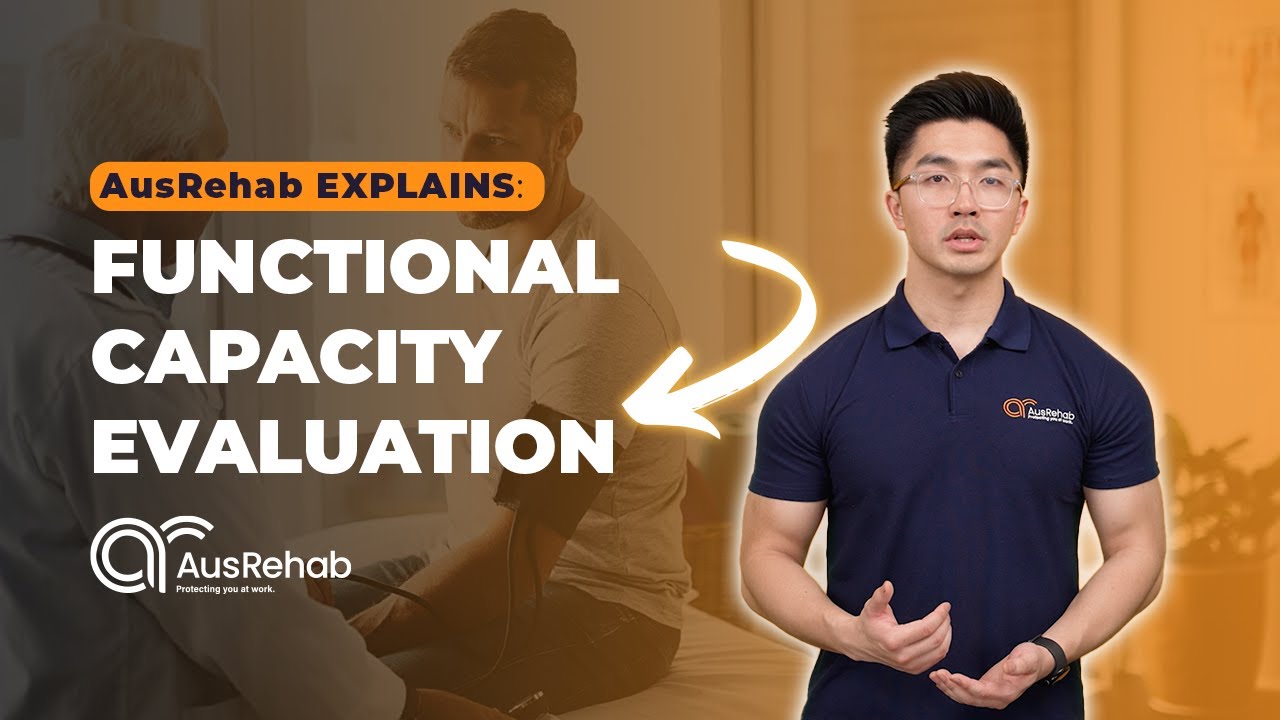
Key Takeaways from the Video

Introduction

Overview of Functional Capacity Evaluations

What Is an FCE

Difference between physical and psychological FCEs

When an FCE Is Needed

Common reasons for referral

Assessment Process

What happens during and after an FCE

Workers Comp Support

How FCEs guide claims and return-to-work planning

Subscribe & Follow

Registered psychologists in NSW performing psychological capacity evaluations

Need Assistance?

If you’re ready to take the next step in your recovery, we’re ready to help.

Video Transcript

00:00:00
Is your employee injured at work? If you are unsure what duties they can perform, or wonder when they can go back to work, a functional capacity evaluation can help. A functional capacity evaluation is a comprehensive assessment of an individual’s health conditions and work capacity when one is injured. There are two types of functional capacity evaluations. Physical and psychological. The type of functional assessment an injured worker undergoes depends on the nature of their workplace injury and claim.

00:00:30
A physical functional capacity evaluation is usually conducted by an occupational therapist, therapist, a physiotherapist, or an exercise physiologist. The physical evaluation aims to assess what the worker can physically do based on the job tasks, identify barriers affecting recovery, like pain, weakness, physiological and psychosocial factors. A psychological functional assessment is conducted by a psychologist focusing on mental health, cognitive and behavioural factors. The psychological evaluation aims to

00:01:01
understand the psychological concerns of an injured worker and assess the cognitive function and social skills of the injured worker. Both evaluations use standardised testing to gauge the worker’s physical and psychological capacity, and limitations. The results can provide an accurate guide to suitable duties for a safe return to work. Here are a few signs you need a functional capacity evaluation: One, the recovery progress of your injured employee has plateaued, and you’re not seeing improvements in their health conditions.

00:01:32
Two, you want to know whether or when they can perform their pre-injury duties. Three, you have difficulty obtaining a medical update from the injured person’s treating providers. Four, additional reassurance is needed for claim progression, for example, to move forward with the next graded suitable duties. If you’ve been experiencing any of the issues above, a functional capacity evaluation may help. The functional assessment provides you with a detailed report featuring evidence of the worker’s current capacity,

00:02:00
and helps you make an informed decision for their return to work. The entire process of a functional assessment can take up to three hours. During the evaluation, the assessor will interview the worker to discuss the general health concerns, including injury history, current health status, medical concerns, and medication use. The assessor will also ask questions to understand how the injury affects the worker’s daily activities and what they find particularly difficult. According to the worker’s injury and specific job demands,

00:02:31
the assessor will then evaluate the functional abilities of the worker. In a physical evaluation, this includes range of movement, lifting and carrying capacity, and other tests. For a psychological evaluation, current functioning such as sleep, memory, cognitive functioning, and social interactions may be assessed. Once the functional assessment is completed, a detailed report will follow within five business days. The report will specify past and current medical conditions of the worker, as well as their injury circumstances,

00:03:00
objective and subjective measurements of their current health conditions, factors affecting the performance, and recommendations on suitable duties and treatment. In New South Wales, functional capacity evaluations are covered under workers compensation and can be requested by any member of the support team, including the treating doctor, the employer, the insurer or other health care professionals. Functional capacity assessments play a vital role in workplace rehabilitation by providing a clear understanding of the worker’s current capacity,

00:03:31
suitable duties and any work restrictions. The assessment report also serves as a valuable tool in assisting the nominated treating doctor to accurately note medical certificate restrictions. Together, the insights help both employers and employees make informed decisions about recovery and return to work planning, minimising risk and supporting a structured reintegration into the workforce. Sounds like something you need? Contact AusRehab to book a functional capacity evaluation today.


What Is a Functional Capacity Evaluation (FCE)?

A Functional Capacity Evaluation (FCE) is a structured assessment that measures a worker’s physical and or psychological capacity to perform work-related tasks. It provides objective evidence about what a worker can safely do following an injury.

An FCE assesses whether a worker can:

Functional capacity assessments are widely used in NSW workers’ compensation claims to support return-to-work planning, insurer decision-making, and dispute resolution.

Physical vs Psychological Functional Capacity Evaluations

Understanding the difference between physical and psychological FCEs is important when planning recovery and return to work.

Physical Functional Capacity Evaluation

Physical assessments are conducted by qualified allied health professionals using standardised testing protocols.

Psychological Functional Capacity Evaluation

Psychological FCEs are commonly used in complex or psychological injury claims to guide safe and sustainable return-to-work decisions.

When Do You Need a Functional Capacity Evaluation?

A Functional Capacity Evaluation may be required when:

These triggers often arise in workers’ compensation claims where clear, defensible capacity information is needed.

What to Expect During and After an FCE

A functional capacity assessment follows a structured and transparent process:

The FCE report includes clear recommendations for:

How an FCE Supports Your Workers' Compensation Claim

A Functional Capacity Evaluation for workers’ compensation provides practical benefits by:

How AusRehab Delivers Functional Capacity Evaluations Across NSW

AusRehab delivers comprehensive Functional Capacity Evaluations across NSW, including Sydney and regional areas.

Our service is supported by:

Book a Functional Capacity Evaluation Today

A Functional Capacity Evaluation provides clarity, confidence, and direction after a workplace injury

AusRehab delivers comprehensive FCEs across NSW to support safe return-to-work outcomes and informed claim decisions.

Functional capacity evaluation services, providing FCE assessment and functional capacity test for safe return to work

Frequently Asked Questions

What is a Functional Capacity Evaluation?

A Functional Capacity Evaluation is an objective assessment that measures a worker’s physical and or psychological ability to perform work-related tasks safely after an injury.

Who conducts a Functional Capacity Evaluation?

FCEs are conducted by qualified allied health professionals with experience in workers’ compensation and return-to-work assessments.

Is an FCE required for workers' compensation claims?

An FCE is not always mandatory, but it is commonly requested when work capacity is unclear, disputed, or requires objective evidence under the NSW workers’ compensation system.

How long does a Functional Capacity Evaluation take?

Most Functional Capacity Evaluations are completed in one session lasting between 1.5 and 3 hours, depending on job demands and injury complexity.

What happens after a Functional Capacity Evaluation?

A detailed report is provided to relevant stakeholders, outlining capacity, restrictions, suitable duties, and recommended next steps.

Does AusRehab provide FCEs across NSW?

Yes. AusRehab delivers Functional Capacity Evaluations across Sydney and throughout NSW.