
Prefer to Listen? Play this quick summary instead!
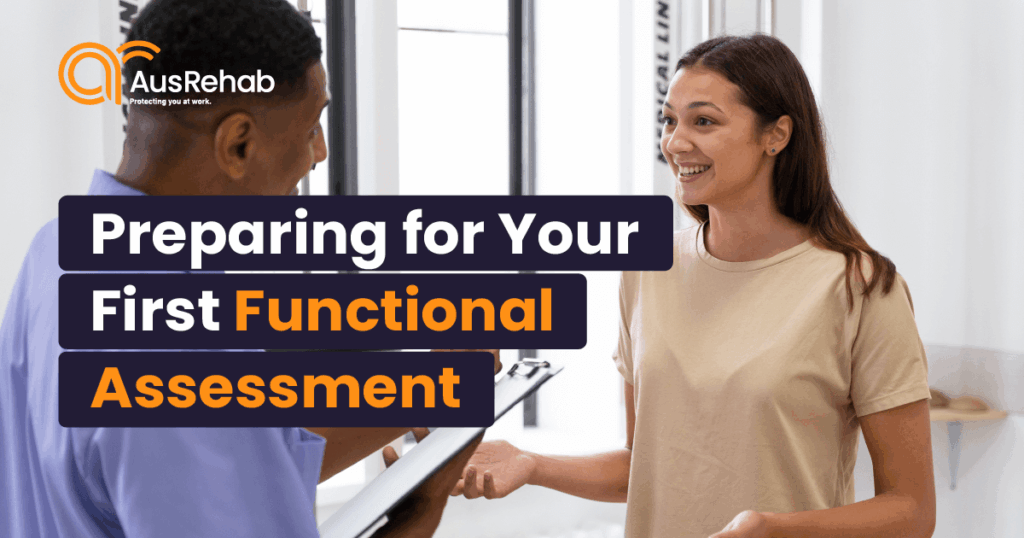
Preparing for Your First Functional Assessment
A functional assessment can feel unfamiliar, especially if it is your first time attending one as part of a workers’ compensation claim. Many injured workers worry that it is a test they can pass or fail, which is not the purpose. A functional capacity evaluation is a supportive process designed to understand what you can safely do at work right now.
Knowing what to expect before, during, and after the assessment can reduce stress. It also helps you feel more confident and prepared. With the right support, functional assessments become a practical step forward in recovery. Providers like AusRehab support this process by keeping it clear, respectful, and focused on long-term outcomes.
Functional Assessment – Key Facts
A functional assessment is used to understand current work capacity in a fair and structured way. It is conducted by qualified rehabilitation professionals using evidence-based methods. The assessment looks at function, not pain tolerance or performance targets. The goal is to support safe return to work planning and suitable duties, not to judge, blame, or question your injury.
What Is a Functional Assessment?
A functional assessment, sometimes called a functional capacity evaluation or work capacity assessment, is an objective way to understand what an injured worker can do safely at work right now. It supports decisions about suitable duties, hours, and next steps in rehabilitation.
The assessment focuses on physical, psychological, or cognitive function, depending on the injury. It considers how the injury affects work tasks and everyday activities. It also identifies current abilities, limitations, and tolerances. This information helps shape safe and realistic return-to-work planning.
A functional assessment is not a medical diagnosis. It is not a fitness test. It is not designed to push anyone beyond safe limits. It is also not about proving or disproving pain. The process stays respectful, paced, and evidence-based.
Functional assessments measure functional ability at a point in time. They provide clear information to support rehabilitation and return-to-work decisions. This helps workers, employers, and insurers plan safely and consistently.
When and Why Does a Functional Assessment Take Place?
A functional assessment during a workers’ compensation process usually occurs after a claim is lodged and early medical certificates are in place. It is requested that once there is enough clinical information to look beyond diagnosis and focus on function.
A functional assessment may be used to confirm current work capacity after injury. It often supports return-to-work or suitable duties planning. It can also review progress over time when recovery has changed or stalled. In more complex or prolonged claims, it helps guide next steps with objective information.
The assessment may be requested by a rehabilitation consultant, an insurer, or an employer through the rehabilitation process. Each request follows the same purpose. It is about safety, planning, and alignment between medical advice and work demands.
Being scheduled for a functional assessment does not mean something is wrong. It does not suggest doubt or concern about effort. It is a common and standard part of workplace rehabilitation. The process helps ensure return-to-work decisions are safe, realistic, and sustainable.
Why has a functional assessment been requested?
A functional assessment is requested to clarify work capacity and support safe return-to-work planning. It is a routine step in workers’ compensation and rehabilitation, not a sign of concern or dispute.
Types of Functional Assessments
There are two main types of functional assessments used in workplace rehabilitation. Each one looks at different aspects of function, depending on the nature of the injury and the demands of the role.
A physical functional assessment focuses on how the body moves and tolerates work tasks. It looks at movement quality, strength, endurance, and physical tolerance. The aim is to understand what tasks can be performed safely and which activities may need adjustment. This type of assessment is commonly used for musculoskeletal injuries or roles with physical demands.
A psychological functional assessment focuses on how a person manages work from a cognitive and emotional perspective. It considers concentration, memory, emotional regulation, and interaction with others. The goal is to understand how psychological or psychosocial injuries affect work capacity and daily functioning. It supports safe planning without judgment or assumptions.
Both assessments are structured and evidence-based. Each one provides practical insight to guide rehabilitation and return-to-work decisions.
Who Conducts the Functional Assessment?
A functional assessment is conducted by a qualified functional assessment rehab consultant with training in workplace rehabilitation. The assessor is selected based on the type of injury and the functional questions that need to be answered.
Physical assessments are commonly completed by Exercise Physiologists, Occupational Therapists, or Physiotherapists. Psychological functional assessments are completed by registered Psychologists with experience in work capacity evaluation. Each professional works within a defined scope of practice and follows regulated standards.
Assessors use standardised and evidence-based methods. The process is structured and objective. It focuses on function rather than opinion. Findings are based on observed ability, tolerance, and task performance within safe limits.
The role of the assessor is not to judge effort or motivation. Their role is to measure current capacity and provide clear functional information that supports rehabilitation and return-to-work planning.
Types of Functional Assessments Used in Workplace Rehabilitation
| Assessment Type | What Is Assessed | When It’s Used |
|---|---|---|
| Physical | Movement, strength, tolerance | Physical injuries or physical job demands |
| Psychological | Cognition, memory, focus, interaction | Psychological or psychosocial injuries |
What Should I Expect at a Functional Assessment?
The session usually begins with a discussion about your injury, symptoms, and recovery so far. This helps the assessor understand how your condition affects daily life and work tasks. You will also review your usual job duties, work environment, and any activities that feel difficult or limited.
The assessment then moves to objective tasks that reflect real work demands. These tasks are selected to match your role and injury. They focus on movement, tolerance, coordination, or concentration depending on the assessment type. The goal is to understand what you can do safely today. The process remains paced and respectful at every stage.
Safety guides the entire session. You are encouraged to speak up if something feels uncomfortable. Tasks can be adjusted, paused, or stopped at any time. The assessment is collaborative. It is not a test to pass or fail. It is a snapshot of your functions to support recovery and return to work planning.
💡 Did You Know? A functional assessment is designed to protect you, not challenge you. You will not be asked to push through pain or perform unsafe movements. You are not expected to prove your injury or compare your performance with anyone else. The focus stays on safe function within your current capacity.
What Happens During a Physical Functional Assessment?
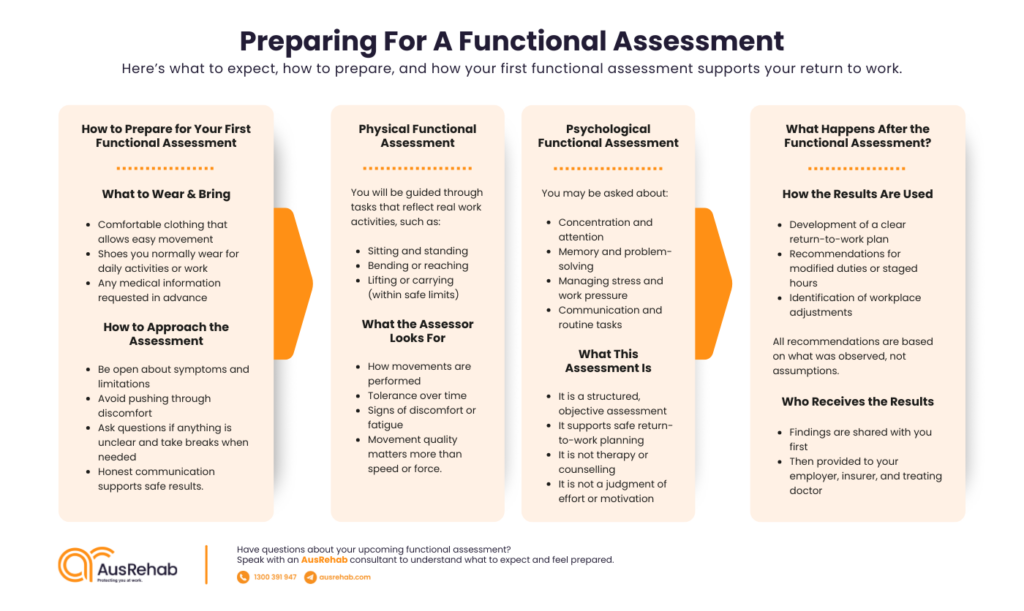
A physical functional assessment focuses on how your body moves and tolerates everyday work tasks. The assessor observes activities that reflect your role and injury. These may include sitting, standing, bending, reaching, or lifting. Each task is chosen to match real work demands rather than generic exercises.
Strength and endurance are assessed within safe limits. The assessor looks at how movements are performed, not how much you can push. Movement quality matters more than speed or force. This helps identify safe capacity and areas that may need support or adjustment at work.
Your tolerance is monitored throughout the session. You are encouraged to describe how tasks feel and when discomfort begins. This information helps build an accurate picture of the current function. It also supports safe planning for duties, hours, and workplace adjustments.
The process remains flexible. Tasks are adjusted to suit your injury, recovery stage, and confidence. You can pause or stop at any time. There is no expectation to work through pain. The goal is to understand what you can do safely today so your return-to-work plan supports recovery rather than setbacks.
What Happens During a Psychological Functional Assessment?
A psychological functional assessment looks at how your mental and emotional health affects daily activities and work demands. The assessor explores areas such as attention, memory, concentration, and emotional regulation in a calm and structured way.
You may be asked about how you manage routine tasks, problem-solving, communication, and work pressures. Questions often relate to real situations at work. This helps clarify how symptoms impact consistency, focus, and confidence across a typical workday.
Emotional well-being is considered in practical terms. The assessor looks at how stress, fatigue, or low mood may affect your ability to engage at work. They also consider coping strategies and supports that help you function more effectively.
This assessment is not therapy. It does not involve treatment or counselling. It is also not a judgment of character, effort, or motivation. The purpose is to gather objective information that supports safe return-to-work planning, suitable duties, and ongoing rehabilitation where needed.
What Happens After the Functional Assessment?
After a return-to-work functional assessment, the focus shifts to turning findings into practical next steps. The results clarify your current work capacity, and they will outline what you can do safely now. They also identify limits that need support or adjustment.
The assessment helps determine suitable duties and hours. This may include modified tasks, reduced loads, or staged increases over time. Workplace adjustments are also considered. These can involve equipment changes, altered workflows, or flexibility around hours and pace. The goal is safe participation rather than rushed recovery.
The findings guide the next phase of rehabilitation. This may include targeted therapy, graded activity programs, or further workplace rehabilitation support. Each recommendation is based on observed function rather than assumptions or job titles.
The process is transparent. Findings are shared with you first. They are then provided to the employer, insurer, and treating doctor. This shared understanding supports consistent decisions and reduces confusion across the claim. It also ensures medical advice, workplace planning, and insurer approvals align.
A structured return-to-work plan is developed from the assessment. The plan sets clear expectations and review points. It supports gradual progress and long-term sustainability. The assessment is not the end of recovery but a practical step that helps everyone move forward with clarity and confidence.
How to Prepare for Your First Functional Assessment
Preparing for a functional assessment is about feeling informed and comfortable. It is not about performing at your best or proving anything. The assessment looks at how you function on the day. Honest preparation helps ensure the results reflect your real work capacity.
Wear comfortable clothing that allows easy movement. Choose shoes you would normally wear for daily activities or work tasks. This helps the assessor realistically observe movement patterns. Bring any medical information requested in advance. This may include recent reports or certificates that explain your injury and recovery stage.
Be open about your symptoms and limitations. Clear information helps the assessor understand what tasks feel manageable and which ones need modification. Avoid pushing through discomfort. Functional assessments are designed to stay within safe limits. You can pause, stop, or ask for clarification at any time.
Ask questions if something feels unclear. Understanding each task reduces anxiety and supports accurate results. Pace yourself throughout the session. Taking breaks when needed supports safety and consistency.
Preparation is about understanding the process, not performing perfectly. The goal is to capture a clear picture of your current abilities. This supports safer decisions for rehabilitation and return-to-work planning.
How Rehabilitation Providers Support the Process
Rehabilitation providers play a central role in making a functional assessment clear, supportive, and meaningful. Their role goes beyond the assessment day itself. The focus remains on recovery, safety, and sustainable return-to-work outcomes.
AusRehab workplace rehab teams support workers before, during, and after the assessment. Before the assessment, we explain the purpose and process in plain language. This reduces uncertainty and helps workers feel prepared rather than judged. During the assessment, we ensure the right assessor is involved at the right time. This supports accuracy and confidence in the findings.
After the assessment, rehabilitation support continues. Results are used to guide realistic return-to-work planning. Duties and hours are matched to current capacity. Adjustments are based on evidence, not assumptions. Communication remains clear across all parties. We liaise with insurers, employers, and treating doctors to keep everyone aligned and informed.
Most importantly, rehabilitation support stays holistic. Recovery does not pause during assessments. Workers remain engaged in treatment, progress reviews, and functional improvement. This supports both well-being and claim efficiency. It also helps prevent delays and confusion during complex claim stages.
How AusRehab supports injured workers before, during, and after a functional assessment
| Support Area | How AusRehab Helps | Worker Benefit | Claim Benefit |
|---|---|---|---|
| Understanding the process | Clear explanations | Reduced anxiety | Better engagement |
| Assessment coordination | Right assessor, right time | Confidence | Accurate outcomes |
| RTW planning | Capacity-aligned duties | Safety | Sustainability |
| Communication | Liaison with doctors and insurers | Support | Transparency |
| Ongoing rehab | Progress reviews | Recovery | Claim efficiency |
How does AusRehab help with functional assessments?
AusRehab explains the process, coordinates assessments, supports return to work planning, and keeps recovery moving while ensuring clear communication across the claim.
Moving Forward With Confidence After Your Functional Assessment
A functional assessment is a supportive and structured step in workplace rehabilitation. It exists to understand current capacity, not to judge effort or pain. The findings help shape safe duties, realistic hours, and sustainable recovery plans. This keeps return-to-work focused on safety, function, and long-term well-being.
If you’re preparing for a functional assessment or need support through your return to work journey, AusRehab is here to help with expert guidance and compassionate care.
Frequently Asked Questions (FAQs)
What is a functional assessment?
A functional assessment is an objective evaluation that measures an injured worker’s current ability to perform work-related tasks safely. It supports return to work planning and rehabilitation decisions without judging pain or effort.
Who conducts a functional assessment?
A functional assessment is conducted by a qualified rehabilitation professional, such as an Exercise Physiologist, Occupational Therapist, Physiotherapist, or Psychologist, depending on the type of assessment required.
How should I prepare for my first functional assessment?
Prepare by wearing comfortable clothing, bringing the requested information, being honest about symptoms, and pacing yourself throughout the assessment.
Are functional assessments different for physical and psychological injuries?
Yes. Physical assessments focus on movement, strength, and tolerance. Psychological assessments focus on cognition, emotional well-being, and work-related coping capacity.
What should I wear to a functional assessment?
Wear comfortable clothing and supportive footwear that allows safe movement. Choose clothes you would normally wear for light activity or work-related tasks.
What happens during a functional assessment?
A functional assessment involves a discussion about your injury and work duties, followed by safe and relevant functional tasks. The process is paced, supportive, and focused on understanding current work capacity.
How long does a functional assessment usually take?
Most functional assessments take one and a half to three hours, depending on the type of assessment and the tasks involved. Breaks are included, and the pace is adjusted to your condition and safety.
Can I bring a support person to my functional assessment?
Yes. You can bring a support person if it helps you feel more comfortable. Let the assessor know in advance so arrangements can be made.
What happens if I feel unwell or need to stop during the assessment?
You can pause or stop at any time. Your safety comes first, and the assessor will adjust or discontinue tasks if symptoms increase or you feel unwell.
Can I raise concerns or ask questions after my functional assessment?
Yes. You are encouraged to ask questions or raise concerns. Your rehabilitation provider can explain findings and next steps in clear terms.
How are functional assessment results used to plan suitable duties or work hours?
Results help identify safe duties, suitable hours, and necessary adjustments. This supports a return to work plan that matches your current abilities.
What happens after a functional assessment?
The results are shared with key parties and used to set work capacity, suitable duties, and the next steps in rehabilitation and return to work planning.
Will my functional assessment results be shared with my employer?
Results are shared only with relevant parties, such as your employer, insurer, and treating doctor. The focus is on work capacity and suitable duties, not personal details.
Can a functional assessment be repeated later in my workers' compensation claim?
Yes. A functional assessment may be repeated to review progress or changes in capacity over time. This helps keep return to work plans appropriate and up to date.
Does a functional assessment affect whether my claim is approved or denied?
No. A functional assessment does not determine claim acceptance. It provides information about the current capacity to support rehabilitation and return to work planning.
What if my functional assessment results differ from my doctor’s opinion?
Differences are reviewed and discussed. The assessment adds objective functional information that complements medical opinions rather than replacing them.
How can a workplace rehabilitation provider support me after a functional assessment?
A provider like AusRehab helps translate results into practical plans, coordinate communication, support recovery, and guide a safe and sustainable return to work.