By
Suzzy at AusRehab
By
Suzzy at AusRehab
Workplace bullying is more than conflict or occasional tension. It is repeated, unreasonable behaviour that creates real psychological and physical health risks. Many workers experience anxiety, stress or fear before they recognise these patterns as bullying. These injuries can affect sleep, confidence, concentration and overall well-being.
You can claim workers’ compensation for workplace bullying when the behaviour leads to a diagnosed physical or psychological injury. This includes conditions such as anxiety, depression, adjustment disorder or post-traumatic stress disorder (PTSD). Physical injuries from violence or threats are also eligible when connected to the workplace.
A claim can give you access to treatment, income support and workplace rehabilitation. Early reporting helps the claim move smoothly and protects long-term health. AusRehab guides workers through early intervention, psychological recovery, and safe return-to-work planning.
Workplace bullying refers to repeated, unreasonable behaviour that creates a health and safety risk. It can happen in any industry or role. The behaviour may be obvious, like verbal abuse or threats, or subtle, like exclusion or persistent criticism. Bullying affects a worker’s mental and physical well-being and often escalates when it is not addressed early.
Not every disagreement or management action is bullying. Reasonable performance discussions, feedback and workplace direction do not fall under bullying when delivered fairly. The key factor is the pattern of behaviour. If the actions target a worker, create fear or undermine their dignity, they may meet the definition outlined by SafeWork Australia and NSW guidelines.
💡 Did you know? Workplace bullying does not always look hostile. Repeated exclusion, silent treatment, information withholding or constant nitpicking can qualify as unreasonable behaviour at work when these patterns create a risk to health and safety.
Workplace bullying takes many forms. Some behaviours are clear and aggressive. Others are subtle but still harmful. These examples of workplace bullying help show how unreasonable behaviour can create real health and safety risks.
Common workplace bullying scenarios include constant criticism in front of colleagues, deliberate exclusion from conversations or meetings, or using threats and intimidation to control a worker.
Bullying can also involve spreading rumours, targeting someone socially or assigning unrealistic workloads as punishment. These patterns often build over time and create a hostile environment that affects a worker’s confidence and mental health.
Common examples include verbal abuse, ongoing criticism, exclusion from team communication, aggressive body language, social isolation, rumours, sabotage of work tasks and unfair workloads intended to cause pressure or distress.
You can make a workplace bullying workers’ compensation claim if the bullying has led to a diagnosed injury. The injury can be physical or psychological as long as it arose out of, or in the course of, your employment. Most claims relate to psychological harm, but physical injuries from violent or aggressive behaviour are also eligible.
A bullying claim in NSW may provide medical treatment, psychological therapy, weekly income benefits and workplace rehabilitation. These supports help stabilise your health, guide your recovery and maintain your connection to work. The claim must be backed by medical evidence that confirms your condition and explains how workplace bullying caused or contributed to the injury.
Yes. You can claim psychological injury workers’ compensation, or physical injury benefits if you have a diagnosed injury linked to repeated and unreasonable behaviour at work. A general practitioner (GP) or psychologist must confirm the injury and its impact on your ability to work.
Workplace bullying can lead to both physical injury and psychological injury. Each category affects workers differently, but both are compensable when a medical professional confirms that the injury is linked to bullying at work.
Physical injury occurs when bullying involves assault or aggressive behaviour. This includes pushing, hitting, grabbing or throwing objects. These actions create visible harm and often require immediate medical attention.
Psychological injury is more common. It develops through repeated intimidation, exclusion, verbal abuse or humiliation. Workers may experience anxiety, depression, adjustment disorder, PTSD or other stress-related conditions. These conditions disrupt sleep, concentration and confidence and often worsen without early treatment.
A claim is possible when a general practitioner (GP) or psychologist provides a diagnosis and explains how bullying contributed to the condition. This medical link is essential for both physical injury bullying claims and psychological injury NSW claims.
Workplace bullying can cause physical injuries from violent actions and psychological injuries such as PTSD, anxiety, depression and adjustment disorders. Both types are eligible for workers’ compensation when supported by medical evidence.
Physical injury occurs when bullying escalates into violence or physical threats. This includes pushing, grabbing, hitting or throwing objects. These behaviours create clear safety risks and often result in bruising, cuts, sprains or even head injuries.
Evidence is important in physical injury workers’ compensation claims in NSW. Workers should keep copies of medical records, incident reports and any witness statements that confirm what happened. These documents help establish how the injury occurred and support a straightforward claim process.
Physical injuries caused by bullying are taken seriously because they show an immediate breach of workplace safety. Early reporting and medical treatment help protect the worker and prevent further harm.
Most bullying cases involve psychological harm. Many workers experience anxiety, depression, adjustment disorder or bullying PTSD symptoms after ongoing unreasonable behaviour. These conditions often appear through sleep problems, panic attacks, loss of confidence or persistent emotional distress.
Psychological injuries need a formal diagnosis. Workers must obtain a Certificate of Capacity from a GP or psychologist. This confirms the condition, explains how work has contributed to it and outlines any limits on work capacity. These documents form the foundation of a psychological injury workers’ compensation claim.
Early support matters. Speaking with a doctor or mental health professional helps workers understand their symptoms and begin recovery. It also ensures the injury is recorded properly for workers’ compensation purposes.
Yes. Workers’ compensation covers psychological injuries caused by workplace bullying when a qualified doctor diagnoses the condition and confirms the connection to work.
Strong evidence helps confirm that bullying occurred and that it caused a work-related injury. Workers should document workplace bullying as soon as possible. This creates a clear record that supports the claim and helps insurers, employers and treating providers understand what happened.
Helpful evidence includes dates, times and descriptions of each incident. Workers should list any witnesses who saw or heard the behaviour. Screenshots, emails, text messages and written communication can also support the claim. Incident reports filed with the employer provide an additional layer of verification.
Medical records and psychological assessments help show the impact of the bullying. A Certificate of Capacity confirms the diagnosis, explains how the injury affects work and outlines treatment needs. This medical evidence is essential when lodging a claim for evidence of bullying in NSW or when seeking to report bullying at work.
You need clear documentation of bullying incidents, copies of any communication that shows the behaviour, witness information and medical records confirming the diagnosis and impact on your ability to work.
Workers should report bullying as soon as the behaviour affects their health, safety or ability to work. Early reporting of workplace bullying helps the employer act before the situation escalates. It also strengthens any future claim by creating a documented timeline.
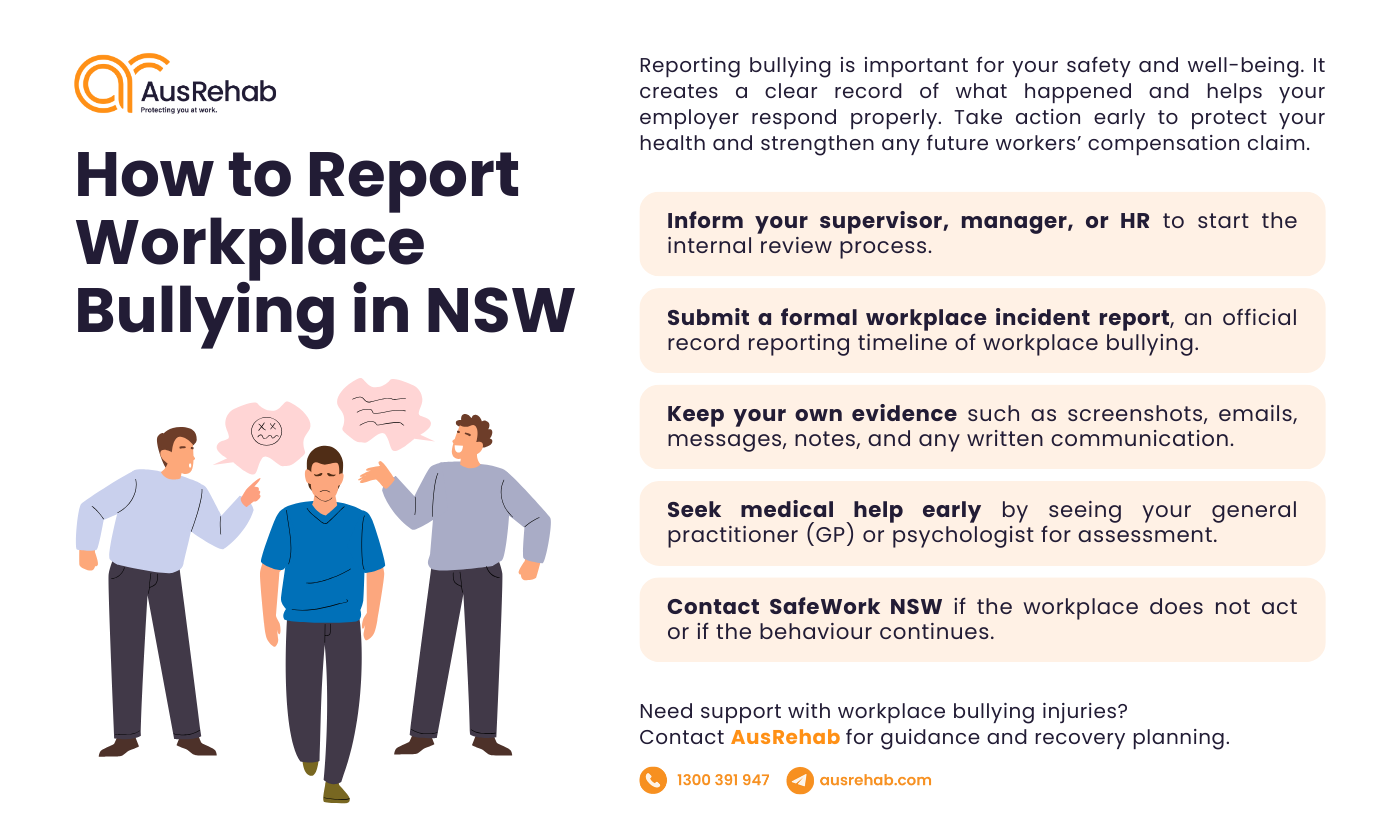
Start by informing your supervisor, manager or HR. This ensures the workplace is aware of the issue and can complete an internal review. Then lodge a workplace incident report. This step creates a formal record that supports your report of bullying at work in the NSW process.
Keep personal copies of evidence, including screenshots, emails and written notes. Seek medical help early so a GP or psychologist can assess your symptoms and provide a Certificate of Capacity if needed. If the workplace does not act or the behaviour continues, escalate the concern through Work Health and Safety (WHS) channels such as SafeWork NSW.
A workers’ compensation claim helps you access treatment and support after workplace bullying. Approved claims give you access to medical and psychological treatment through your GP, psychologist or other providers. These services help stabilise symptoms and support recovery.
You may also receive income support during time off work. This protects your financial security while you focus on your health. Workers can access workplace rehabilitation and return-to-work planning through accredited providers, such as AusRehab. These services help you stay connected to work or transition into safe, suitable duties.
A claim also protects your workers’ rights in NSW under the legislation. If you cannot return to your previous role, you may access vocational services that help you explore new employment options. These bullying compensation benefits give you structured support from early recovery to return to work.
You can access treatment, income support, workplace rehabilitation and vocational services through workers’ compensation. These supports help you recover and return to safe work after bullying.
Early intervention prevents psychological injuries from worsening. Bullying-related stress can escalate quickly, so timely action supports recovery and protects workers under NSW systems. Using early intervention in psychological injury helps workers get the right support at the right time.
Psychological injuries respond best to early care. Timely GP visits, counselling, and support services reduce the risk of long-term harm. Early treatment also improves clarity about the injury and creates a clear path for recovery.
Workplace rehabilitation succeeds when introduced before symptoms become severe. Early planning helps workers stay connected to their employer. It also creates opportunities for suitable duties and role adjustments that support a safe return to work.
Reporting bullying early gives employers and insurers time to act. Early reports help prevent further harm. They also guide workplaces to address risks and meet their WHS responsibilities.
Early intervention reduces symptom severity, supports timely treatment, and improves recovery outcomes. It also helps protect workers’ rights and strengthens the success of workplace rehabilitation.
AusRehab provides structured support to workers recovering from bullying-related injuries. The team applies workplace rehabilitation services that follow SIRA standards. Each service focuses on early contact, coordinated care, and steady progress toward recovery.
The team coordinates with treating psychologists and GPs. We complete workplace assessments to identify safe duties and conduct psychological and functional assessments to guide treatment. Return-to-work planning begins early to support stability. Workers also receive vocational assistance when a new role becomes necessary. Ongoing monitoring keeps recovery on track.
Service | Purpose | Benefit |
Psychological Support Coordination | Connects treating providers with the employer | Ensures consistent treatment and recovery support |
Identifies safe and suitable duties | Helps workers maintain work connections and safety | |
Plans new work options when required | Supports recovery when returning to the old role is not possible | |
Guides workers through the job search process | Reduces claim duration and builds confidence | |
Aligns doctors, workers, and insurers | Creates clear decisions about treatment and recovery |
AusRehab supports workers by coordinating treatment, identifying safe duties, planning return to work pathways, and providing vocational services when needed. The team offers early intervention and consistent monitoring to help workers recover safely and confidently.
Workplace bullying creates real health and safety risks. Workers can claim workers’ compensation for physical or psychological injury when the harm is linked to work.
AusRehab helps workers understand their options, navigate psychological injury claims, and plan a safe return to work. Our team supports every stage of recovery and ensures workers stay informed and confident throughout the process. Reach out for guidance on bullying claims, psychological injury support, and workplace rehabilitation.
📞 1300 391 947
📧 office@ausrehab.com
🔗 Get the support you need at every stage of recovery with AusRehab today.
Workplace bullying involves repeated and unreasonable behaviour that creates a risk to health and safety. It can include exclusion, verbal abuse, intimidation, constant criticism, or any pattern of conduct that harms a worker’s well-being.
Yes. Severe or prolonged bullying can lead to PTSD. Symptoms may include intrusive thoughts, sleep problems, panic, and emotional distress.
Report the behaviour to your supervisor, manager, or HR. Lodge an incident report, keep copies of evidence, seek medical help early, and escalate through WHS channels if the workplace does not act.
AusRehab provides early intervention, psychological support coordination, workplace assessments, return-to-work planning, vocational assistance (including job-seeking and job placement with a new employer), and ongoing monitoring to support safe recovery.
Don’t forget to share!

Subscribe to stay updated on the latest workplace news.

Resolve your work
place injury today